This website uses cookies
We use cookies to ensure that we give you the best experience on our website. If you continue to use this site we will assume that you are happy with it.


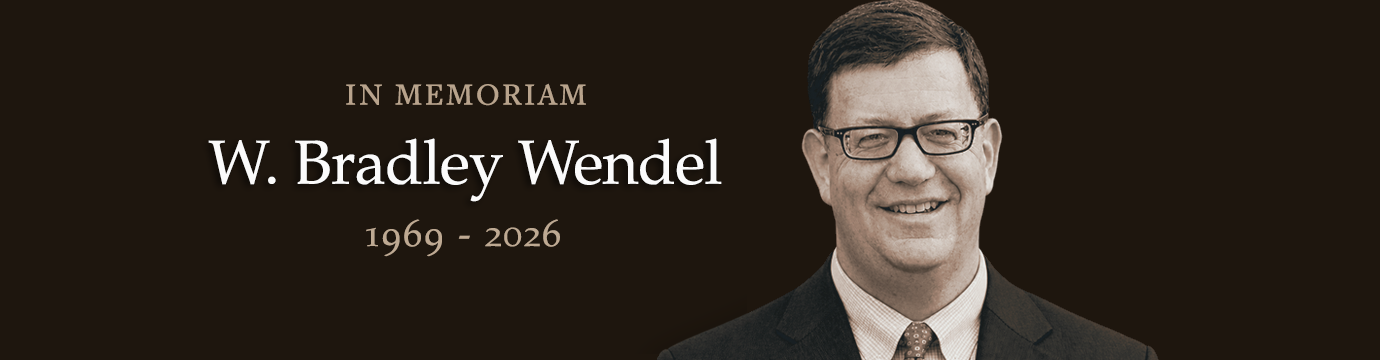
November 18, 2026
Cornell Law School mourns the loss of W. Bradley Wendel, the Edwin H. Woodruff Professor of Law, who died suddenly on November 18 at the age of fifty-seven. A member of the Cornell Law faculty for more than two decades, Wendel was an internationally recognized scholar of legal ethics, a devoted teacher and mentor, and a colleague who brought the questions that animated his scholarship into the classroom.
“Brad was the model of what a great legal scholar should be,” said Jens David Ohlin, the Allan R. Tessler Dean and Professor of Law. “He was focused on the big questions about the role of lawyers in our democratic system, but he was also a brilliant lawyer himself. He could talk about Kant and then pivot to parsing the language of a statute, the Model Rules of Professional Conduct, or a torts case. He was a giant in the classroom, in our community, and in the field of legal ethics.”
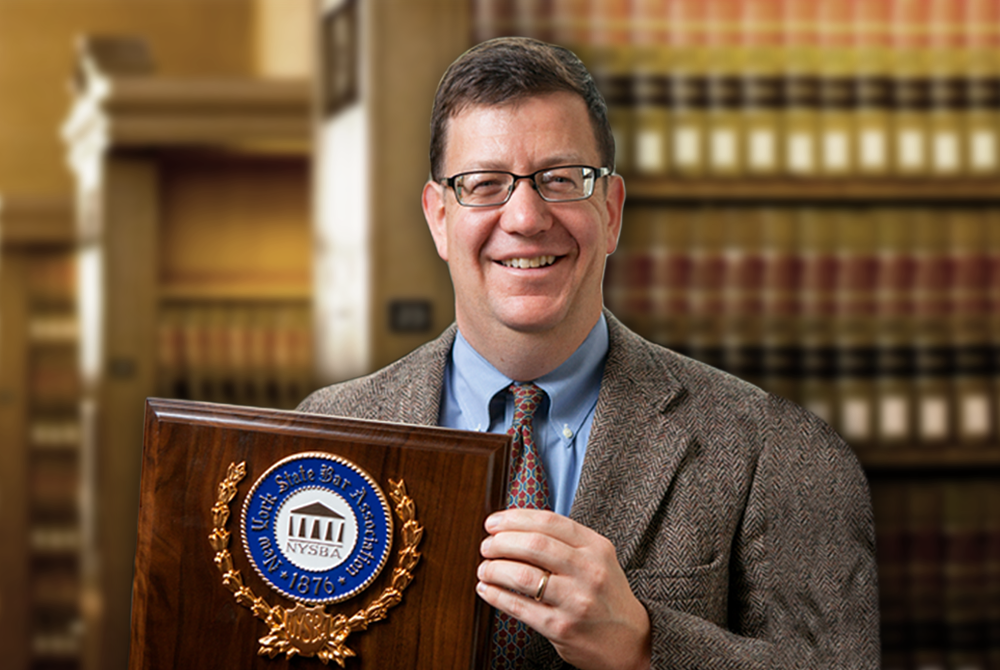
Brad Wendel with his 2012 Sanford D. Levy Memorial Award from the New York State Bar Committee on Professional Ethics.
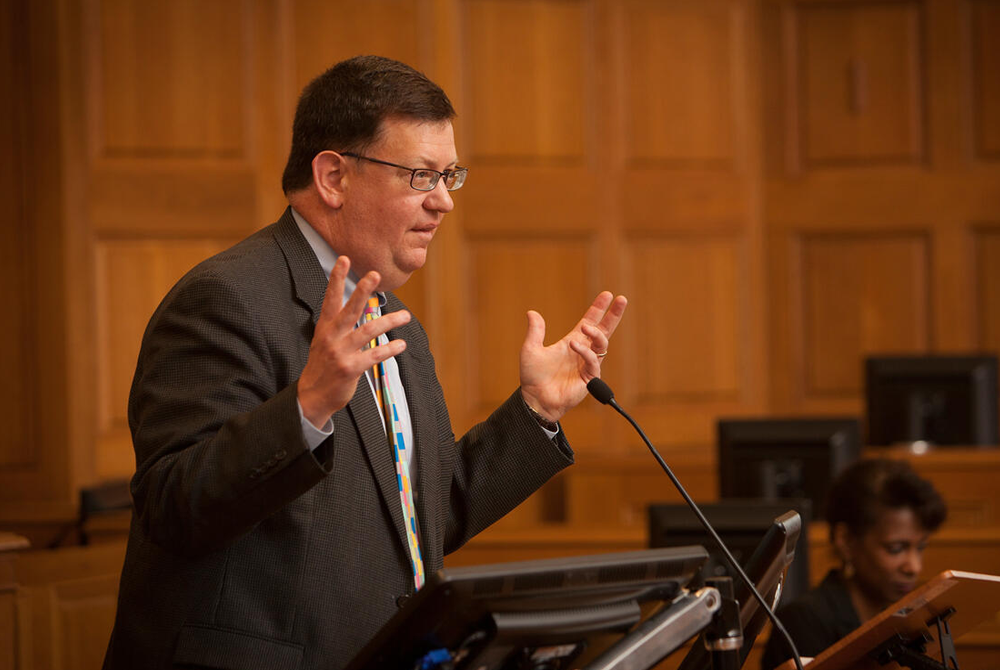
Brad Wendel talking to the audience during his ‘Ethics and Law’ book celebration in 2015.
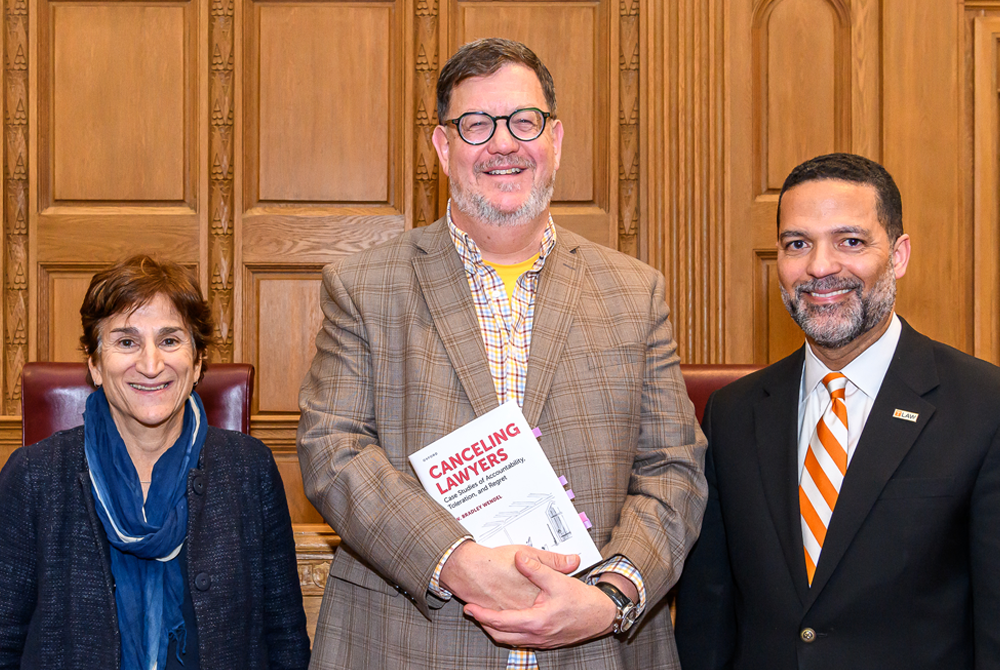
(L to R) Abbe Smith of Georgetown Law School, Brad Wendel, and Lonnie T. Brown Jr. of the University of Tennessee College of Law, during the 2024 discussion on legal ethics, “Canceling Lawyers: Case Studies of Accountability, Toleration, and Regret.”
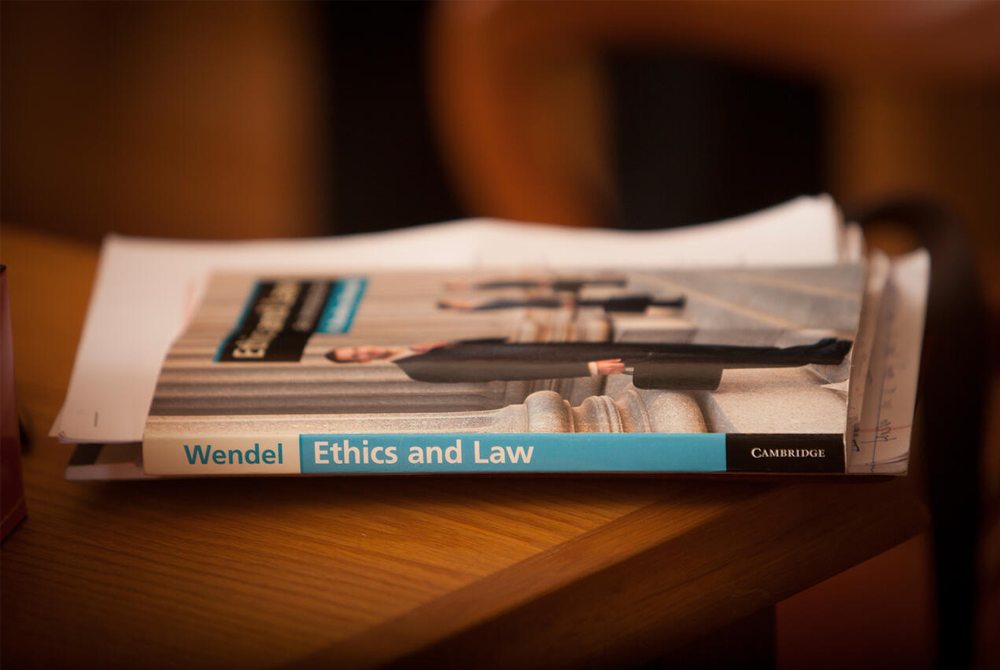
Brad Wendel’s Ethics and Law book.
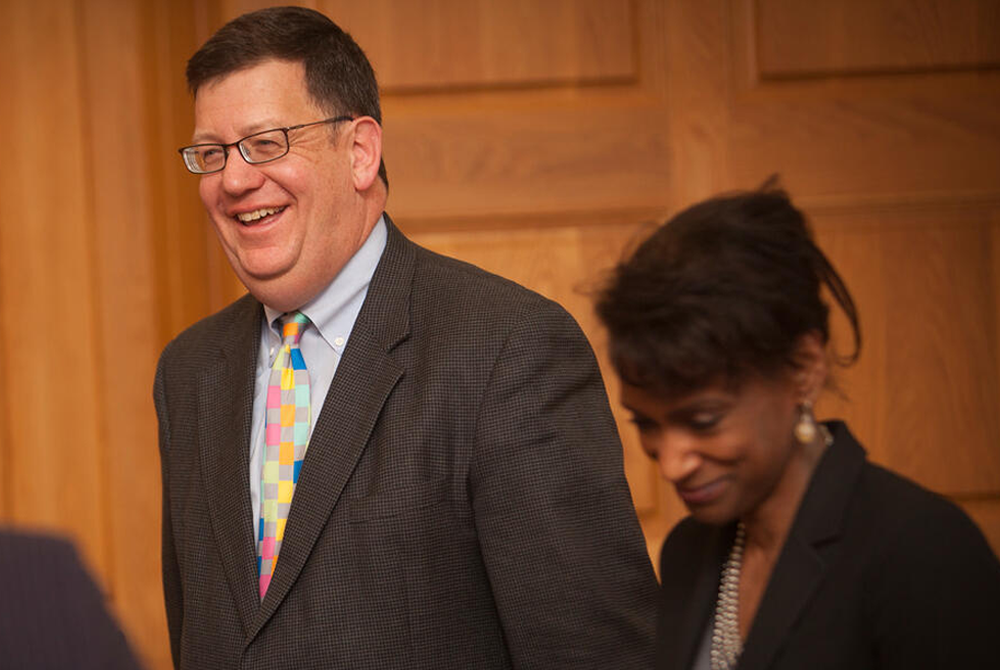
Brad Wendel after his ‘Ethics and Law’ book celebration in 2015.
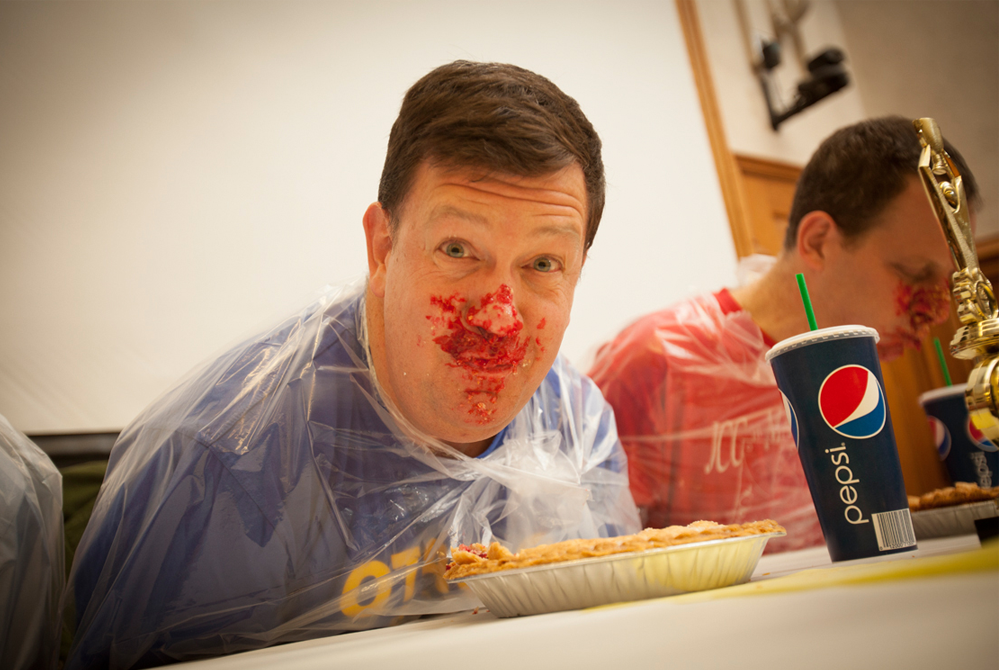
Brad Wendel participating in the Cornell Law School pie eating contest.
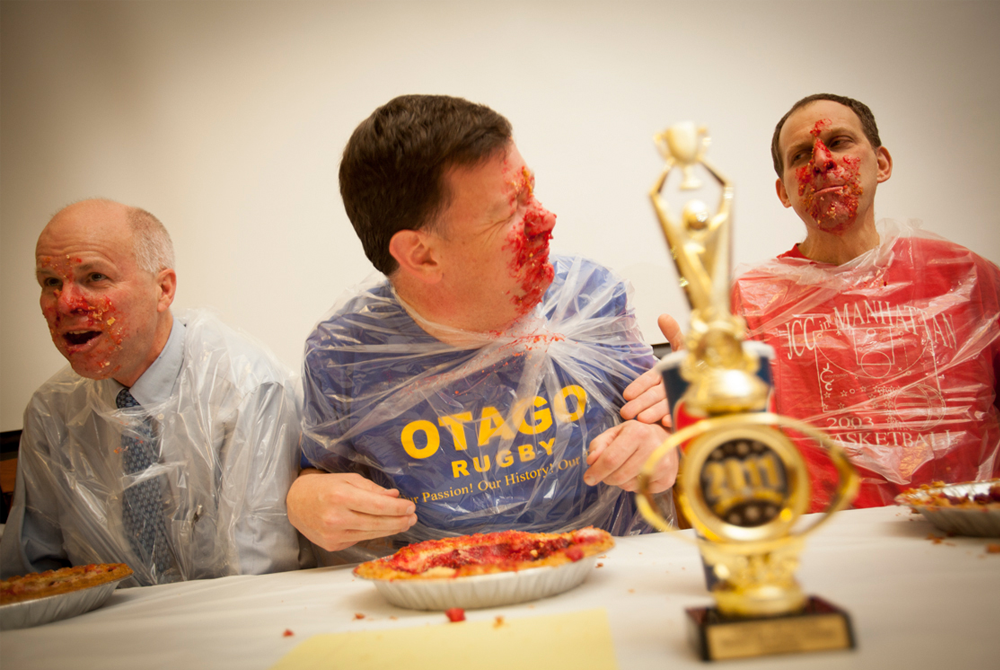
(L to R) Cornell Law Professors Stewart Schwab, Brad Wendel, and Michael Dorf.

Brad Wendel and his wife Elizabeth Peck.
A question ran through Wendel’s scholarship: What does a lawyer owe to the law when a client wants an answer the law cannot support? In his 2010 book Lawyers and Fidelity to Law, he argued that lawyers serve their clients by interpreting the law in good faith. That obligation mattered, he wrote, because the law gives people who disagree deeply a way to resolve disputes and live together. In his 2025 Cardozo Law Review article “The Good Lawyers of January 6,” he examined how lawyers put that obligation into practice. Some advised Vice President Mike Pence that the plan to use alternate electors lacked a legal basis. Others refused to take part in the plan.
Wendel also asked what lawyers owe the public when they take on controversial clients. His 2024 book, Canceling Lawyers: Case Studies of Accountability, Toleration, and Regret, examined why the tradition of representing unpopular clients matters and how a lawyer might still have reason to explain, or even regret, a professionally permissible choice. Wendel’s article “Lawyer Shaming” earned the 2021 Fred C. Zacharias Memorial Prize for Scholarship in Professional Responsibility, and in 2024 he delivered Hofstra Law’s Howard Lichtenstein Distinguished Professorship in Legal Ethics Lecture.
Wendel brought questions from his research directly to students. At a Lawyers and Democracy roundtable for the J.D. Class of 2027, he spoke about the value of a legal system that gives people a way to handle disagreement. He wanted students to see that they could help sustain that system in the ordinary work of representing clients. “There’s something valuable about representing clients within the law no matter what area you practice in,” he told them.
He gave just as much thought to how students learned. When the COVID-19 pandemic forced the Law School to move classes online in March 2020, Wendel turned years of exam questions and classroom examples into weekly exercises for his Professional Responsibility course. As he recalled in a 2021 Cornell Law Forum essay, “Learning How to Teach Again,” students who chose a wrong answer received an explanation while the problem was still fresh. He wrote with humor about getting his home recording setup working with help from his twenty-year-old son and reflected on what he wanted to bring back to the classroom once they could meet in person again.
Before entering law teaching, Wendel practiced products liability litigation at Bogle & Gates in Seattle and clerked for Judge Andrew J. Kleinfeld of the U.S. Court of Appeals for the Ninth Circuit. He taught at Columbia Law School from 1997 to 1999 and at Washington and Lee University School of Law from 1999 to 2004 before joining the Cornell faculty. At Cornell Law, he taught Professional Responsibility, Torts, and Products Liability, among other courses, and served as associate dean for academic affairs from 2017 to 2020. He earned a B.A. from Rice University, a J.D. from Duke University School of Law, and an LL.M. and J.S.D. from Columbia Law School.
“He was a loving father and husband, a pilot, a chef, a mentor to generations of students, a renaissance man,” Ohlin said. “It’s just impossible to conceive of Cornell Law School without him.”
Wendel is survived by his wife Elizabeth Peck and children Ben and Sam Wendel.