This website uses cookies
We use cookies to ensure that we give you the best experience on our website. If you continue to use this site we will assume that you are happy with it.


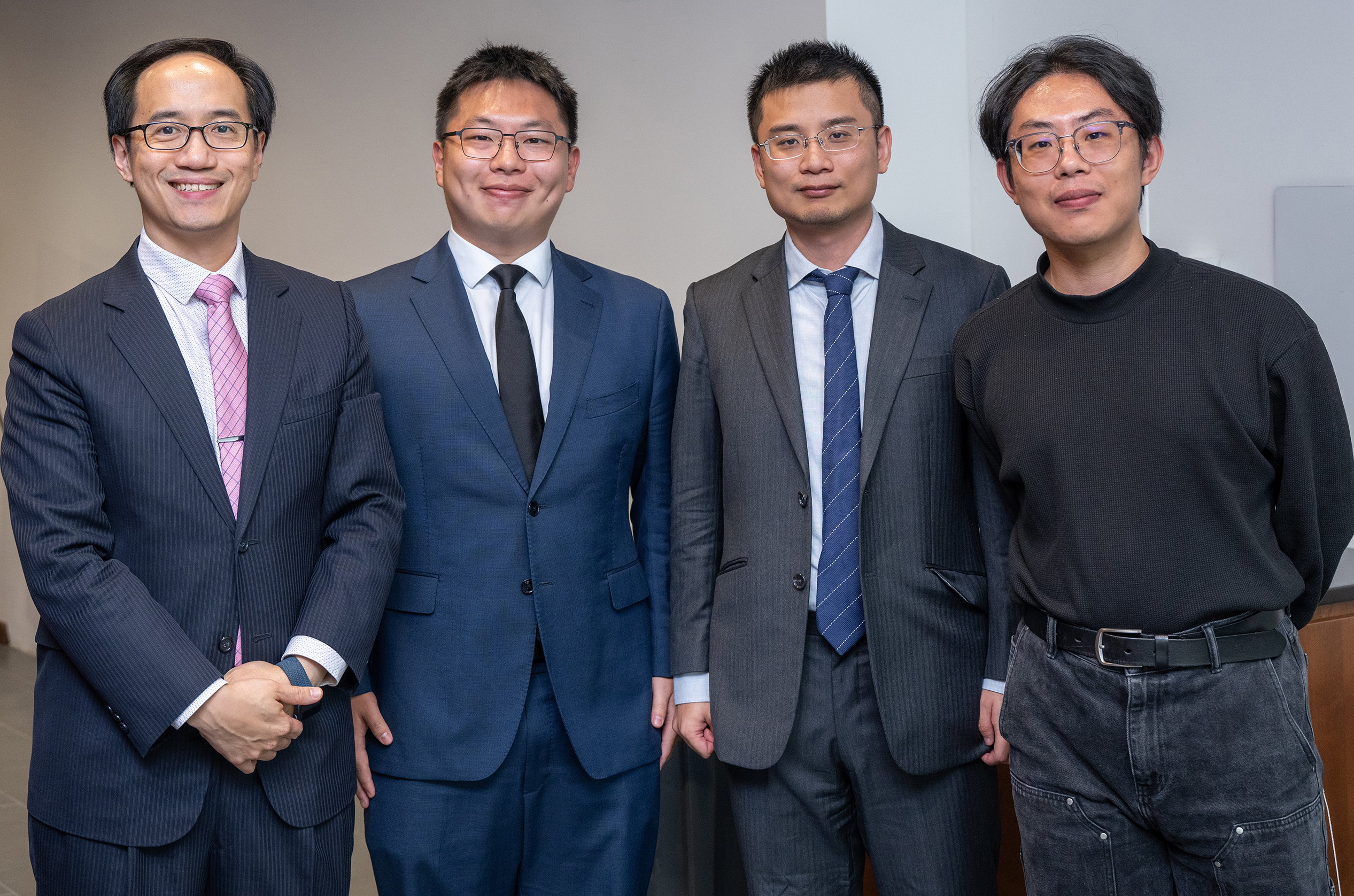
How should courts interpret private law? When should judges look beyond their own legal systems, and when should they rely on tradition, local values, or social norms?
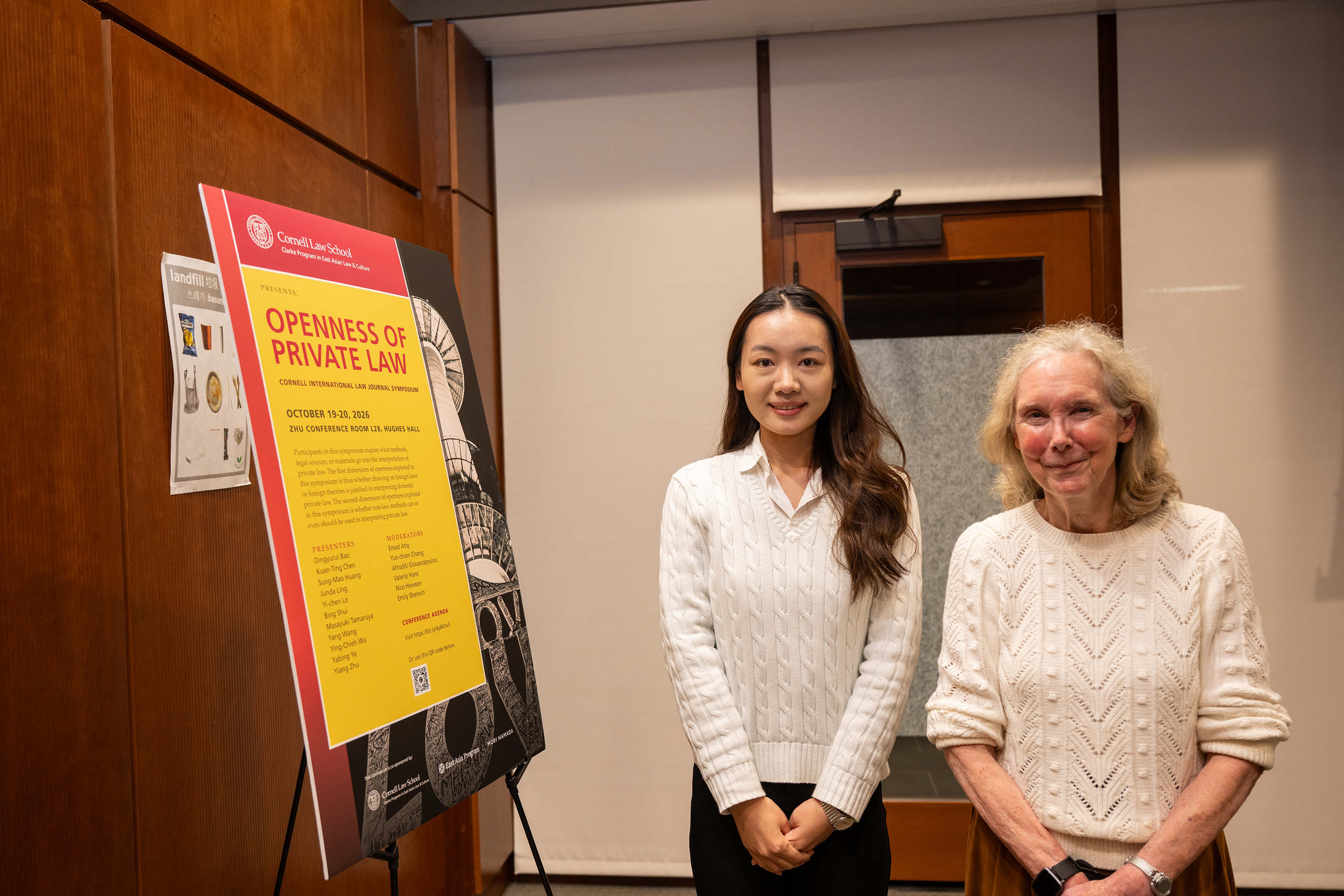
Those questions brought legal scholars from East Asia and North America to Cornell Law School on October 19–20 for “Openness of Private Law,” a Cornell International Law Journal symposium held in Hughes Hall and cosponsored by the Clarke Program in East Asian Law & Culture and Mori Hamada. The two-day conference explored how private law develops through engagement with foreign legal systems, comparative scholarship, social science, and changing social conditions.
The symposium was organized by Yun-chien Chang, the Jack G. Clarke Professor in East Asian Law and director of the Clarke Program, and Huajian Ding ’27, editor in chief of the Cornell International Law Journal. Participants examined questions ranging from trust law and property rights to legal methodology and the role of social norms in shaping private law.
In opening the symposium, the organizers highlighted two central dimensions of “openness.” They asked whether private law should draw on foreign legal traditions and whether legal interpretation can benefit from methods and insights developed outside law itself.
The first session, moderated by Emily Sherwin, Frank B. Ingersoll Professor of Law at Cornell Law School, looked at what happens when a legal institution crosses borders. Masayuki Tamaruya of the University of Tokyo traced the early use of trusts in Japan to companies issuing bonds in London or New York. Bondholders wanted independent trustees to manage the assets securing those bonds. That commercial purpose helped shape which foreign models Japanese lawyers found relevant. Ying-Chieh Wu of Seoul National University approached trusts from a civil-law perspective, examining what it means for a trustee to hold legal ownership and a beneficiary to hold equitable ownership.
In a session moderated by Valerie Hans, Charles F. Rechlin Professor of Law at Cornell Law School, Bing Shui of the University of Macau examined how Chinese courts use two tools from abroad to assess precautions against injury. The American Hand formula weighs the burden of taking a precaution against the likelihood and severity of harm. German doctrine addresses duties to prevent harm. Shui found that courts used the two approaches selectively, sometimes together, depending on the facts and legal questions at issue.
Cornell Law doctoral candidate Yiang Zhu brought the discussion from the courtroom into the community. Drawing on interviews with landlords and tenants in Shanghai and Flushing, Queens, as well as observations in housing court and community chat groups, Zhu examined how invoking a legal protection against eviction could earn a renter the stigmatizing label “professional tenant.” He traced the label’s spread in Flushing to the pandemic eviction moratorium and showed how the social cost of exercising a right could discourage tenants from using it.
The second day opened with property arrangements in Ming and Qing China. Yang Wang of Tsinghua University described how different people could hold distinct interests in the same plot of farmland and how a farmer could transfer land while retaining the right to reclaim it for a price. Yabing Ye of Shanghai Jiao Tong University used a dispute over competing claims to property to argue that judges should identify the problem in domestic law before deciding whether a foreign approach might help.
Sung-Mao Huang of Academia Sinica urged Taiwanese courts to ask whether they face the same social problem as their foreign counterparts and whether the values behind a foreign solution fit Taiwan’s legal system. In a lunchtime talk, Nico Howson of the University of Michigan Law School examined gaps in China’s insider-trading prohibition through the example of confidential information about a merger or acquisition passed along a chain of recipients.
The afternoon sessions turned to how judges explain their choices. Yi-chen Lo of National Taipei University argued that judges who apply a rule strictly should explain why it should pertain even when there are reasons to make an exception. Dingyurui Bao of Renmin University compared how Chinese and U.S. courts use dictionaries, showing how judges can reach different conclusions even when they consult the same kind of source. Junda Ling of Peking University’s School of Transnational Law examined a Chinese court’s decision to hold a teenage rescuer partly liable despite a provision shielding people who voluntarily render emergency aid.
Cornell Law doctoral student Kuan-Ting Chen closed the presentations by asking what comparison can offer when the purpose of a rule is itself in dispute. A foreign approach, he argued, can give judges a concrete example against which to test their own understanding of principles such as freedom of contract.
The event reflected the Clarke Program’s commitment to fostering dialogue among scholars working across legal traditions. By bringing together researchers from multiple jurisdictions and disciplinary perspectives, the symposium created an opportunity to examine how private law evolves through interaction with history, culture, institutions, and comparative experience.
Conference participants along with organizers Yun-chien Chang, Jack G. Clarke Professor in East Asian Law (left 1) and Huajian Ding ’27, editor in chief of the Cornell International Law Journal (left 2)
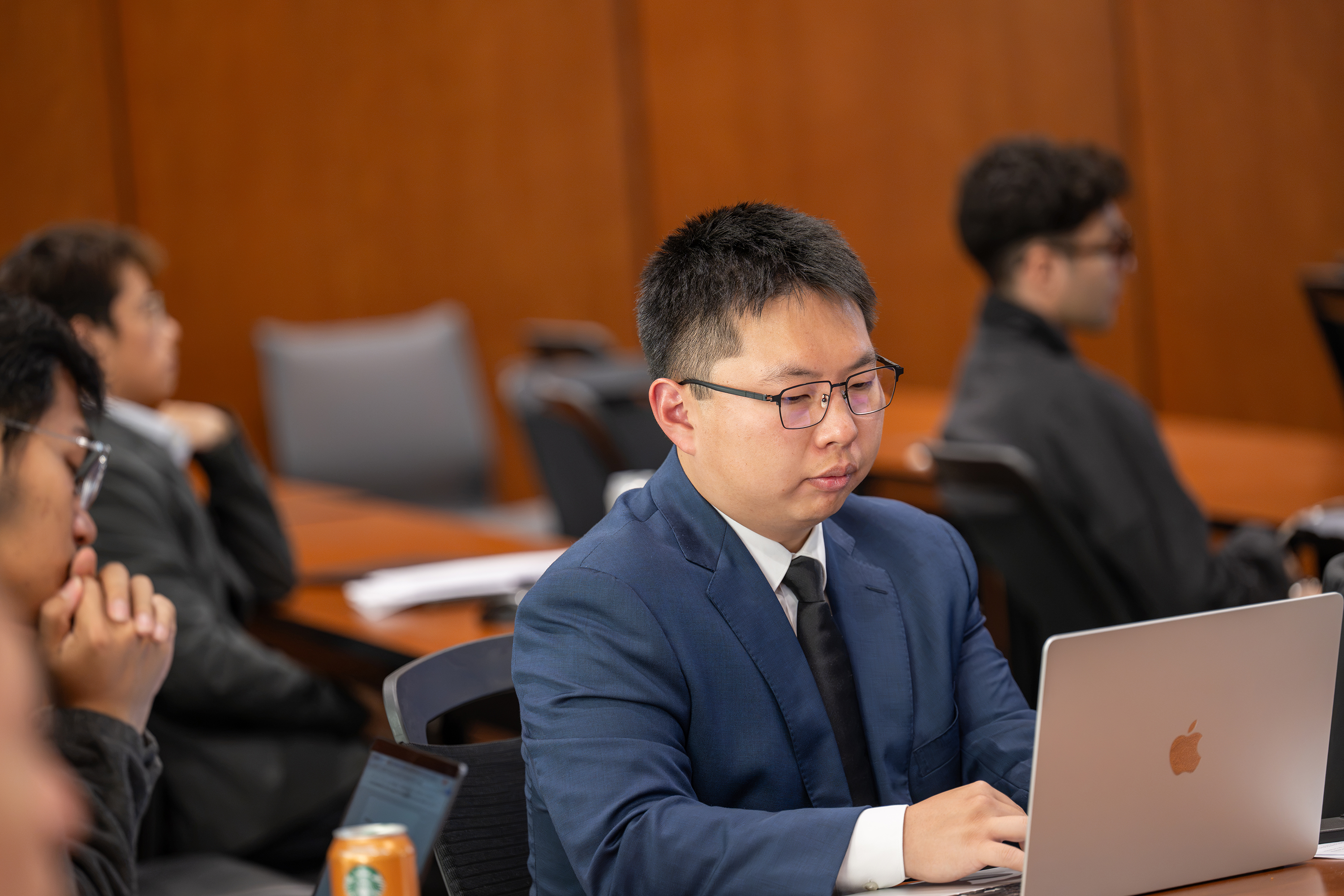
Huajian Ding ’27, editor in chief of the Cornell International Law Journal
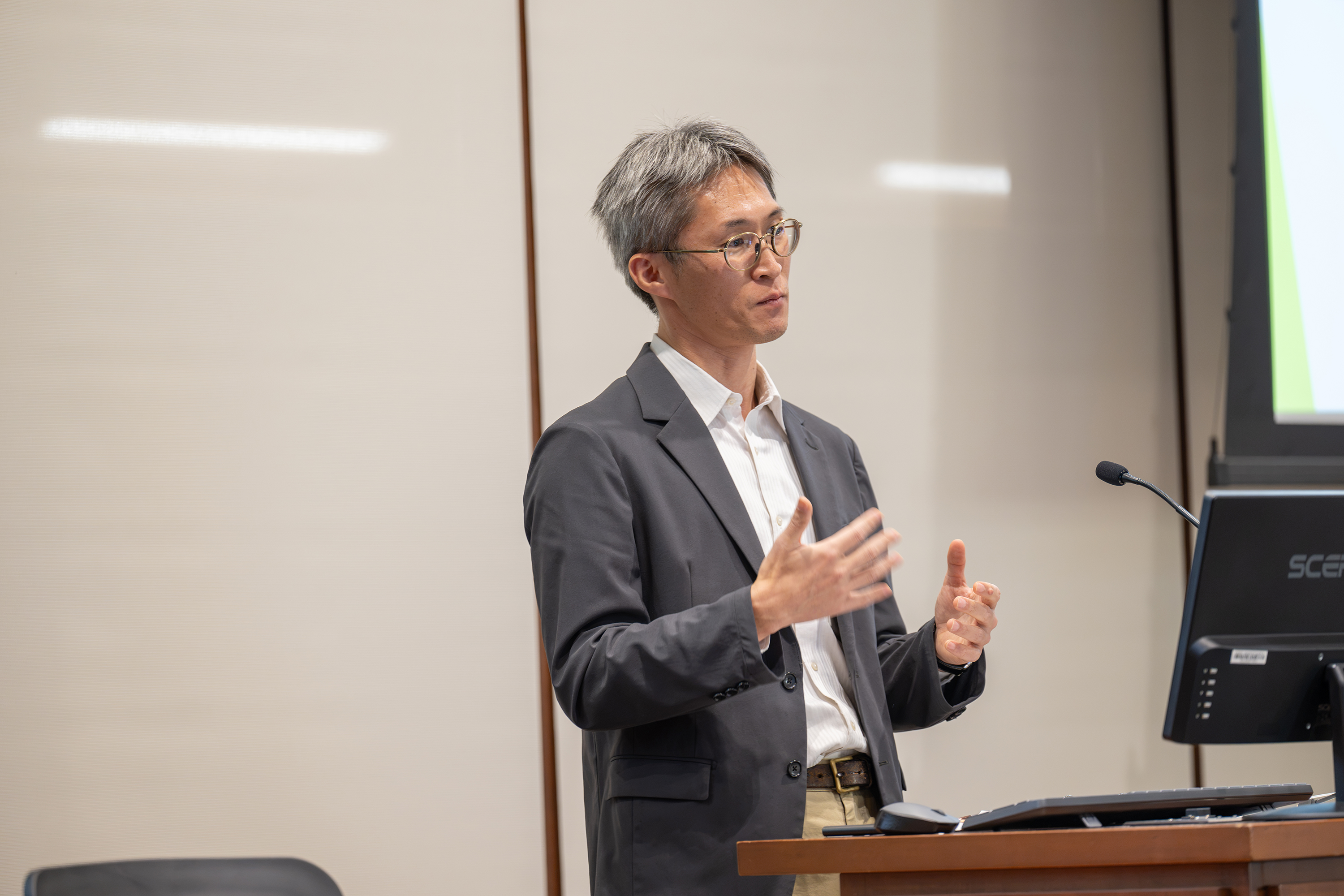
Masayuki Tamaruya, Professor of Law, University of Tokyo (Japan)
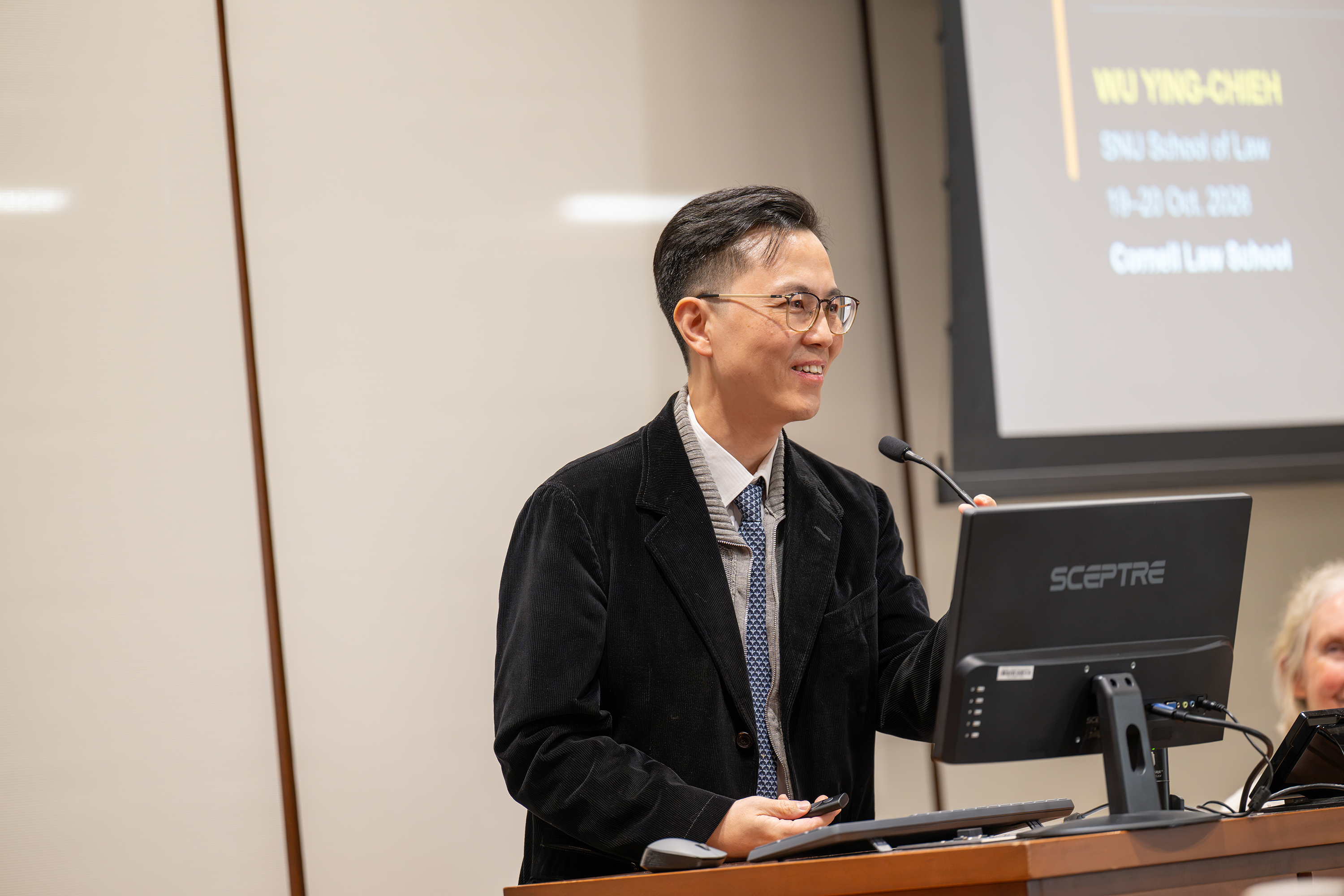
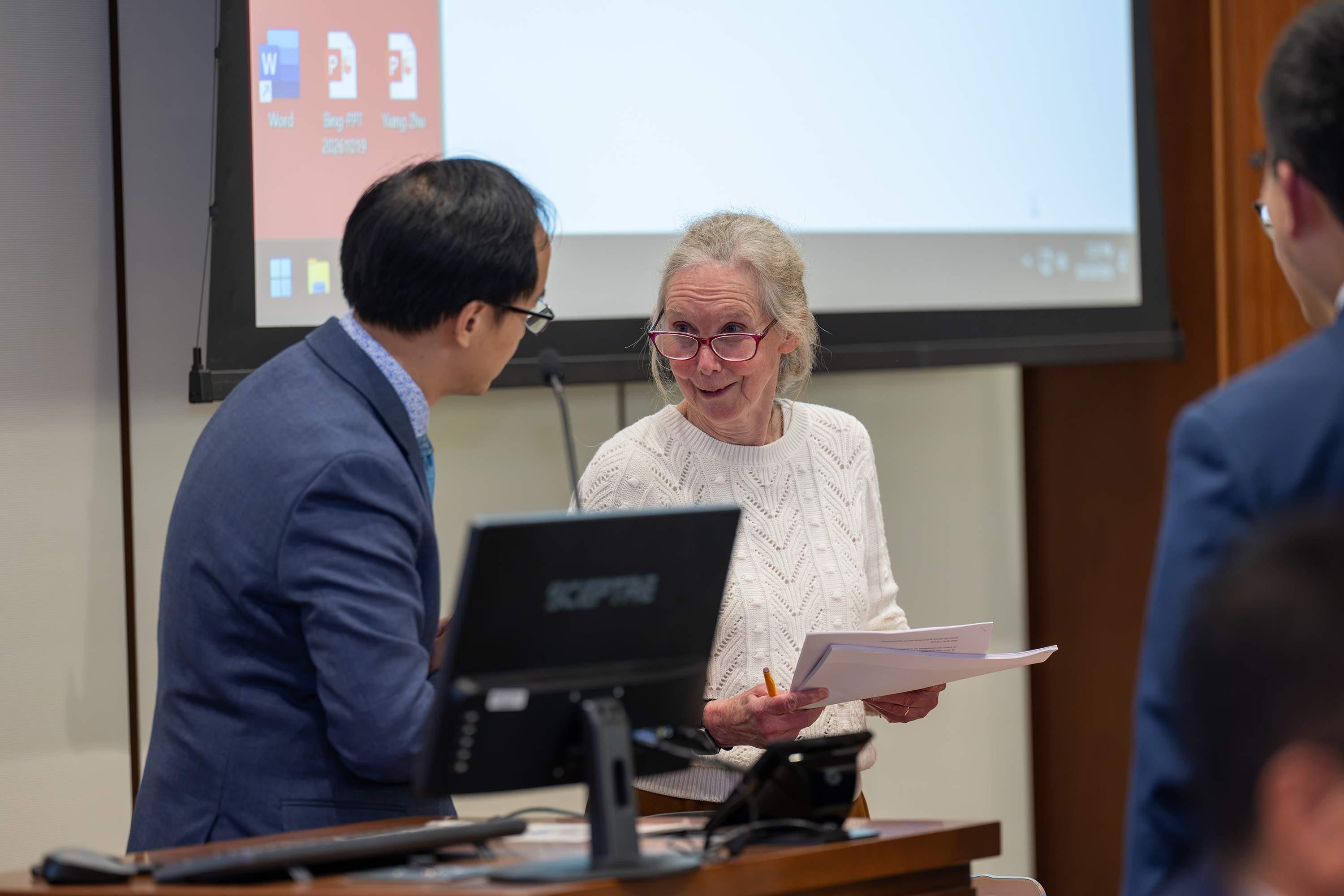
Emily Sherwin, Frank B. Ingersoll Professor of Law
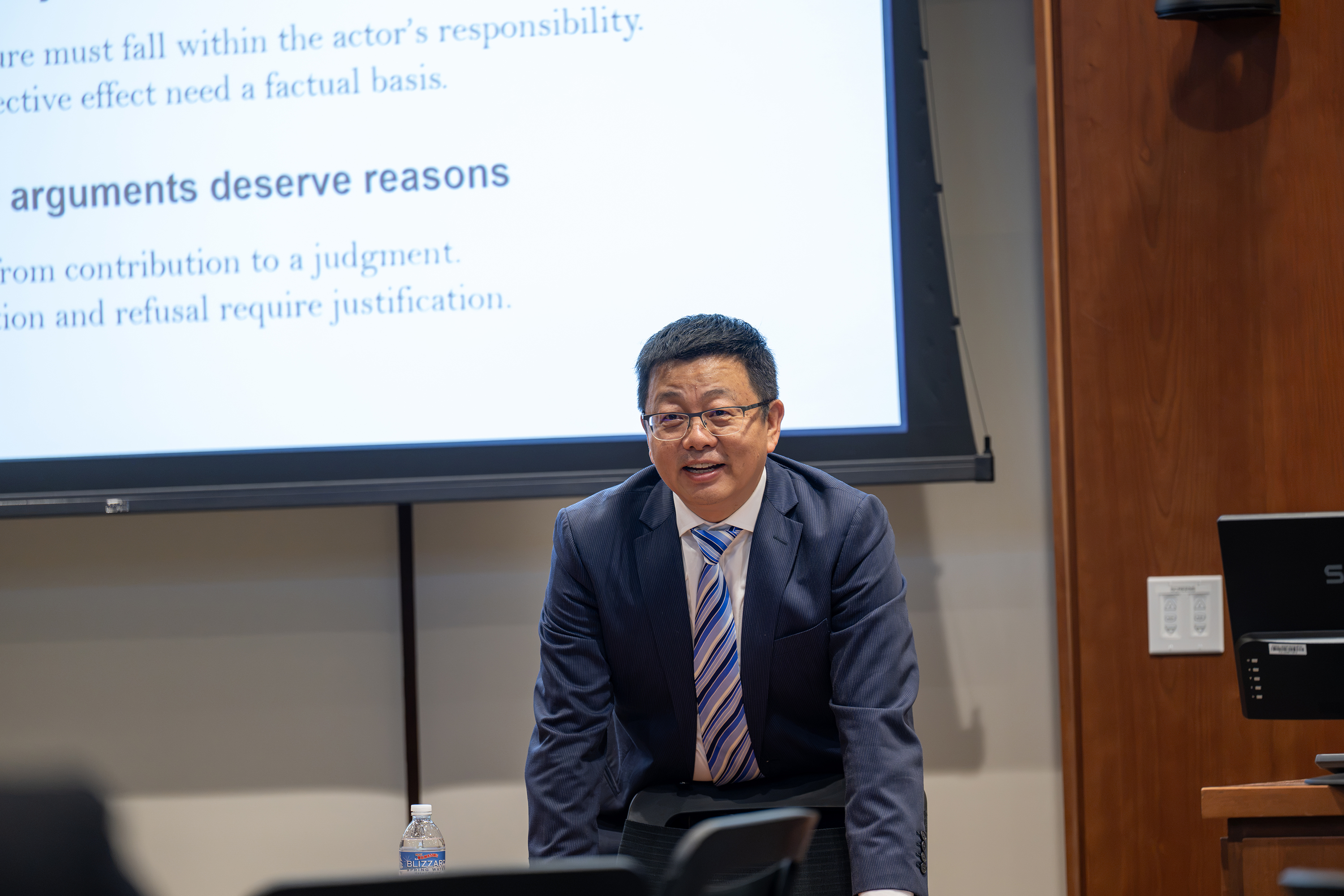
Bing Shui, Professor of Law, University of Macau (Macau)
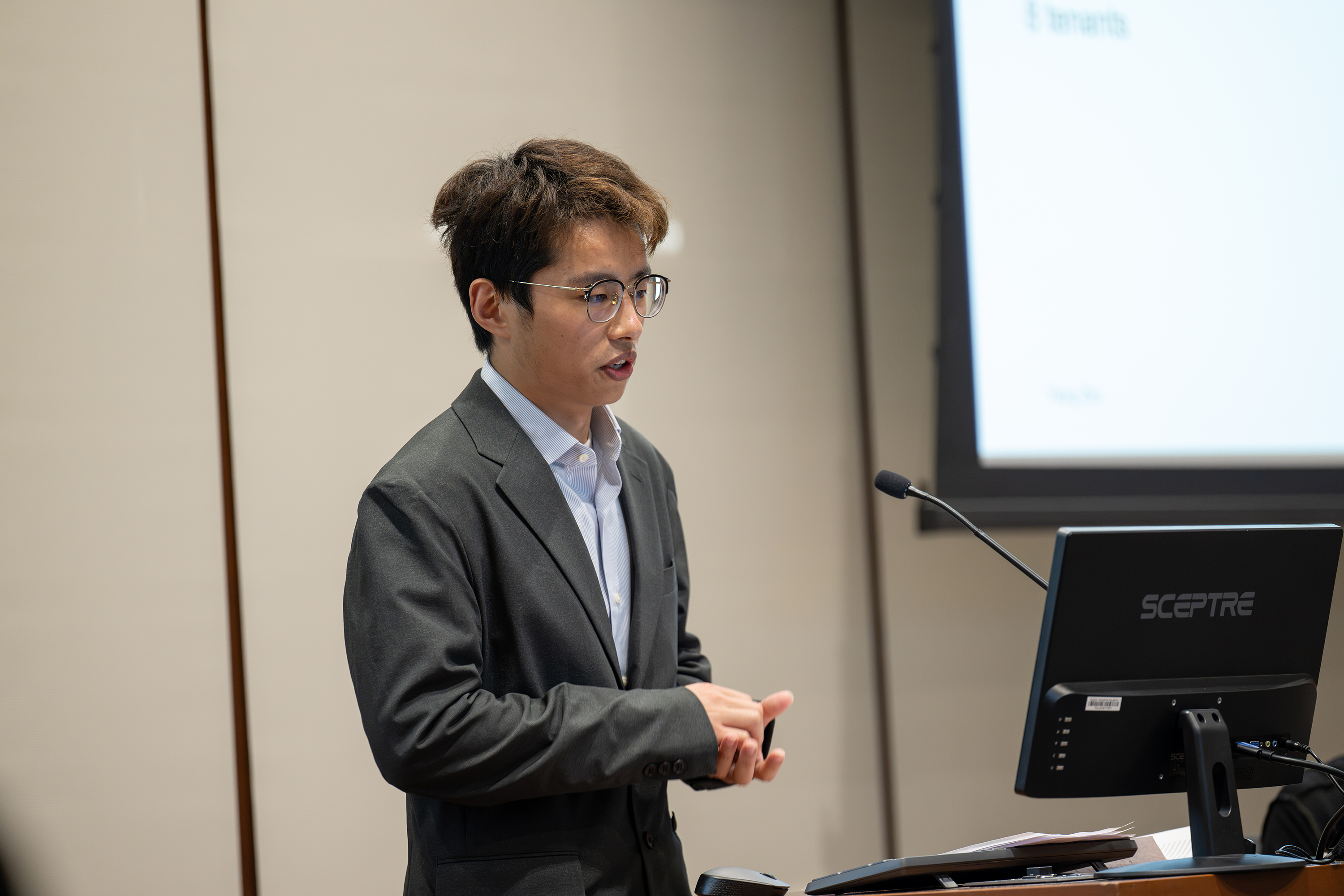
Yiang Zhu, J.S.D. candidate, Cornell University
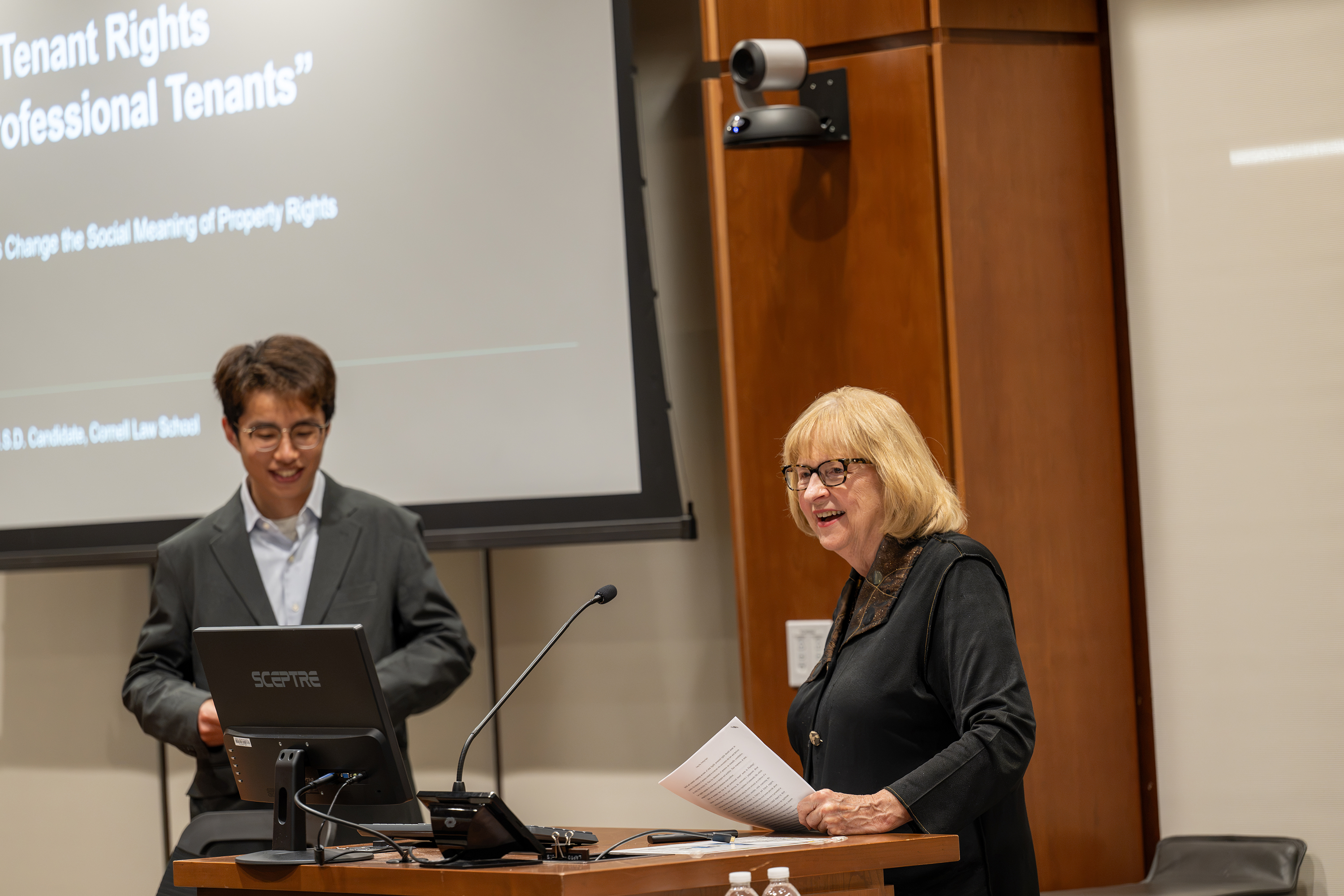
Valerie Hans, Charles F. Rechlin Professor of Law (right) commented on Yiang’s paper
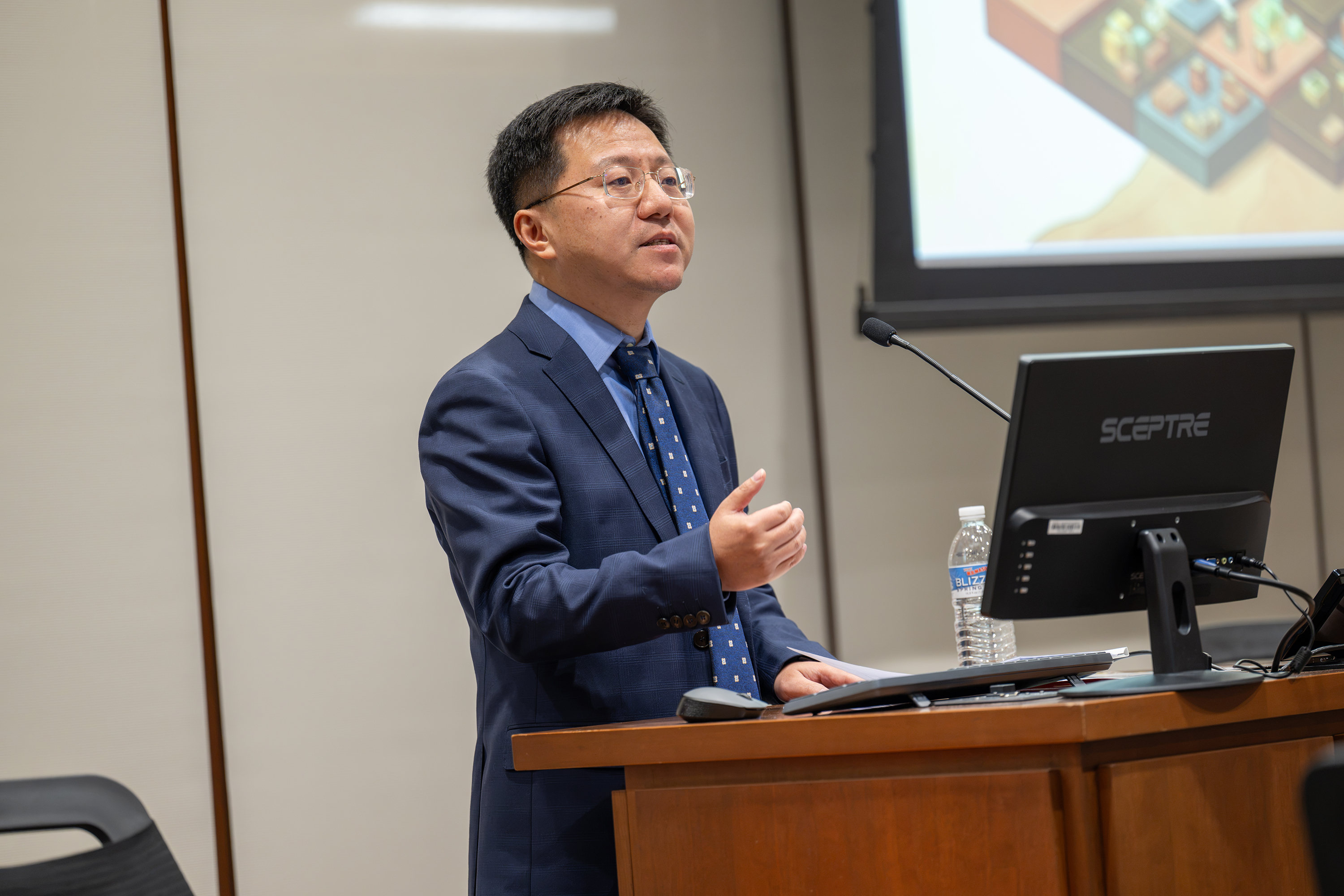
Yang Wang, Professor of Law, Tsinghua University (China)
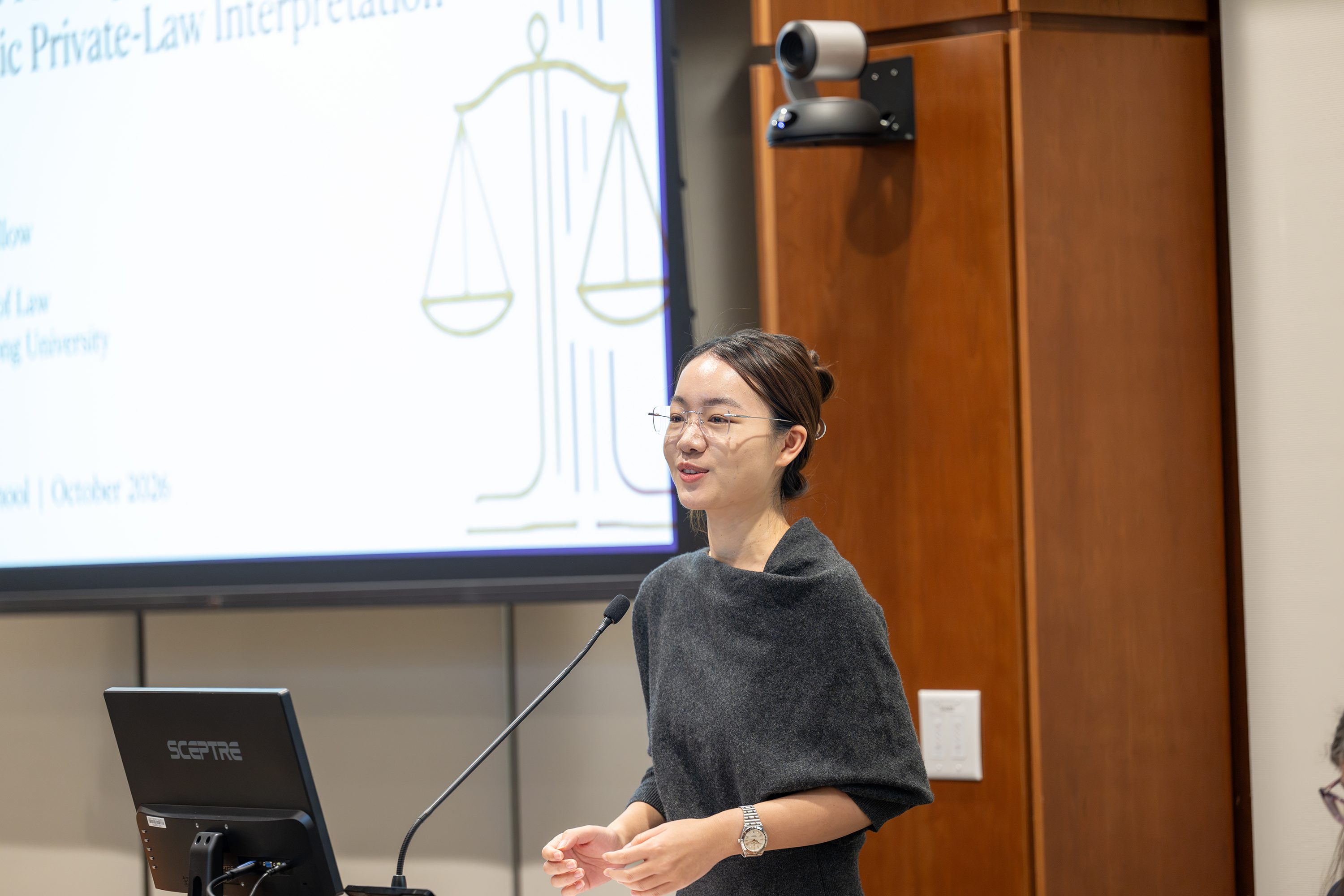
Yabing Ye, Post-Doc, KoGuan School of Law, Shanghai Jiao Tong University (China)
Yabing Ye & Emily Sherwin
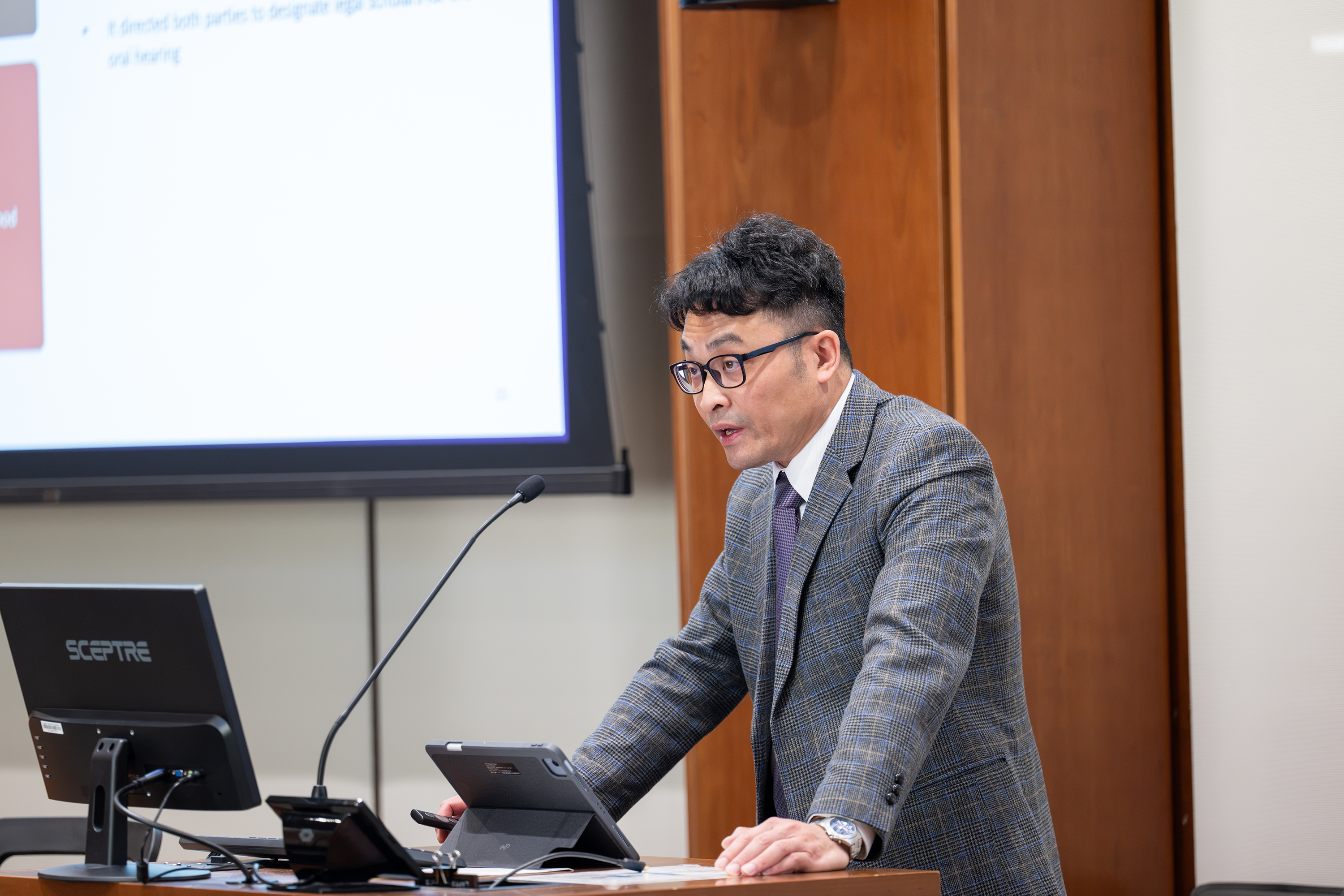
Sung-Mao Huang, Associate Professor, Academia Sinica (Taiwan)
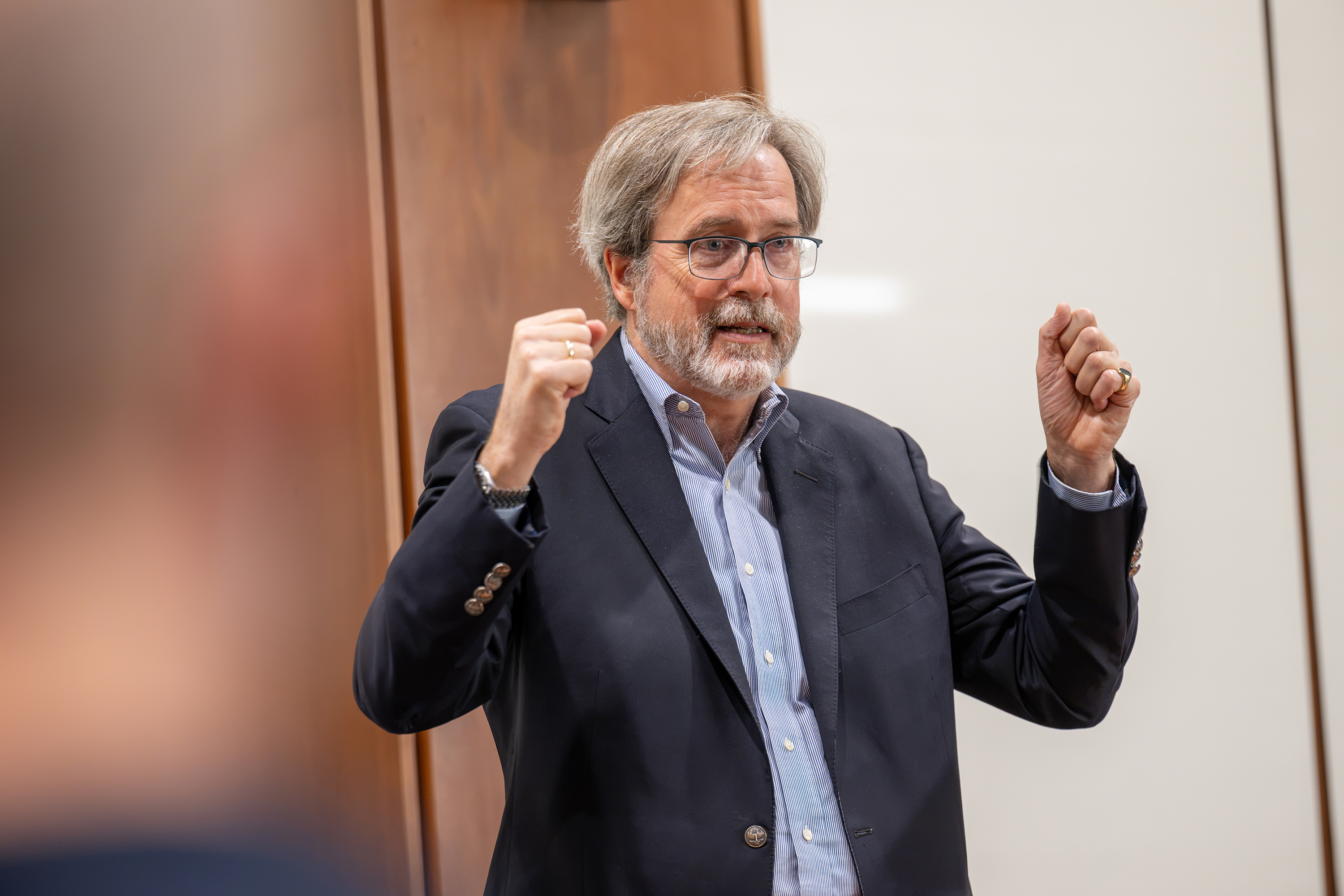
Nico Howson, Pao Li Tsiang Professor of Law, University of Michigan
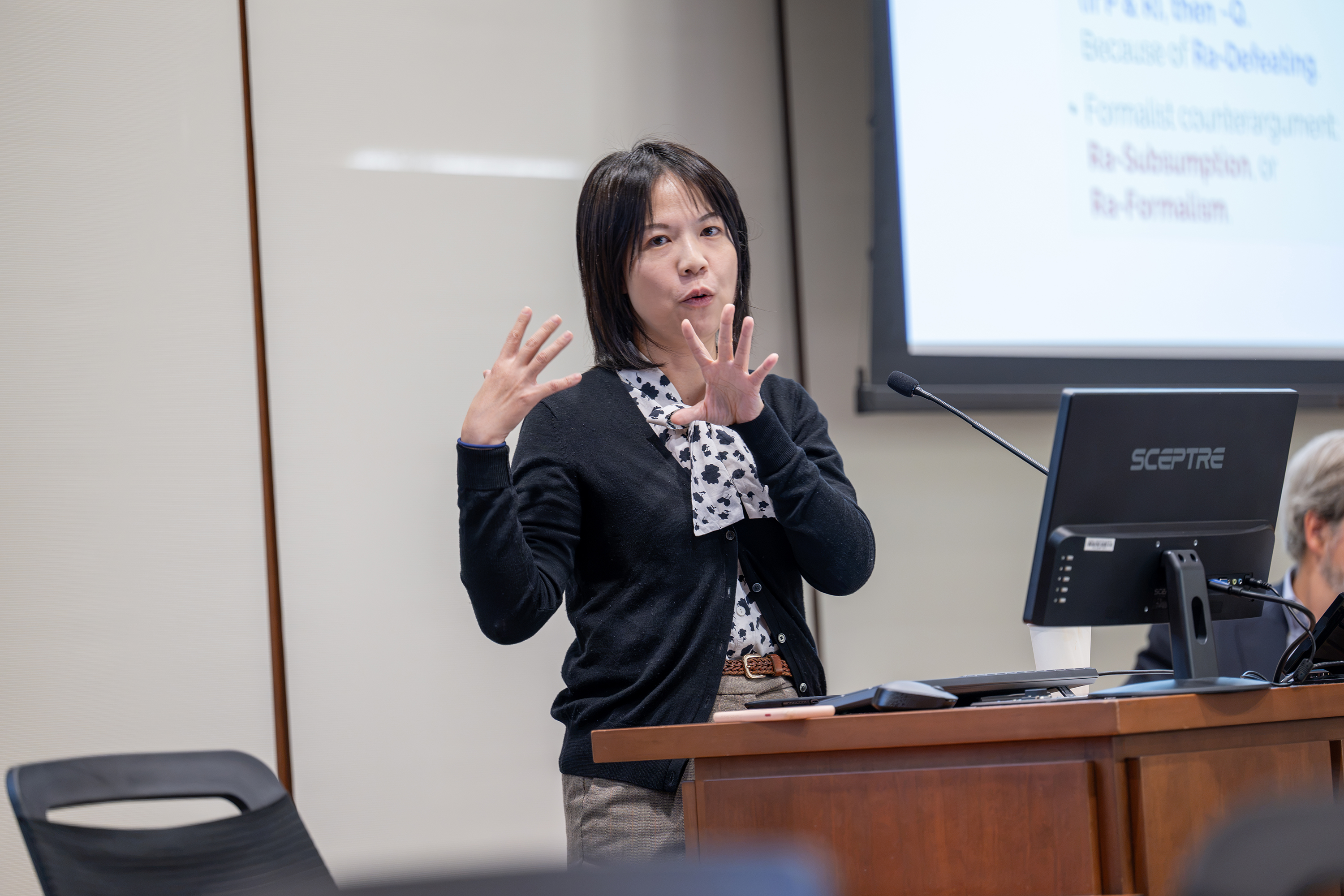
Yi-Chen Lo, Assistant Professor, National Taipei University (Taiwan)
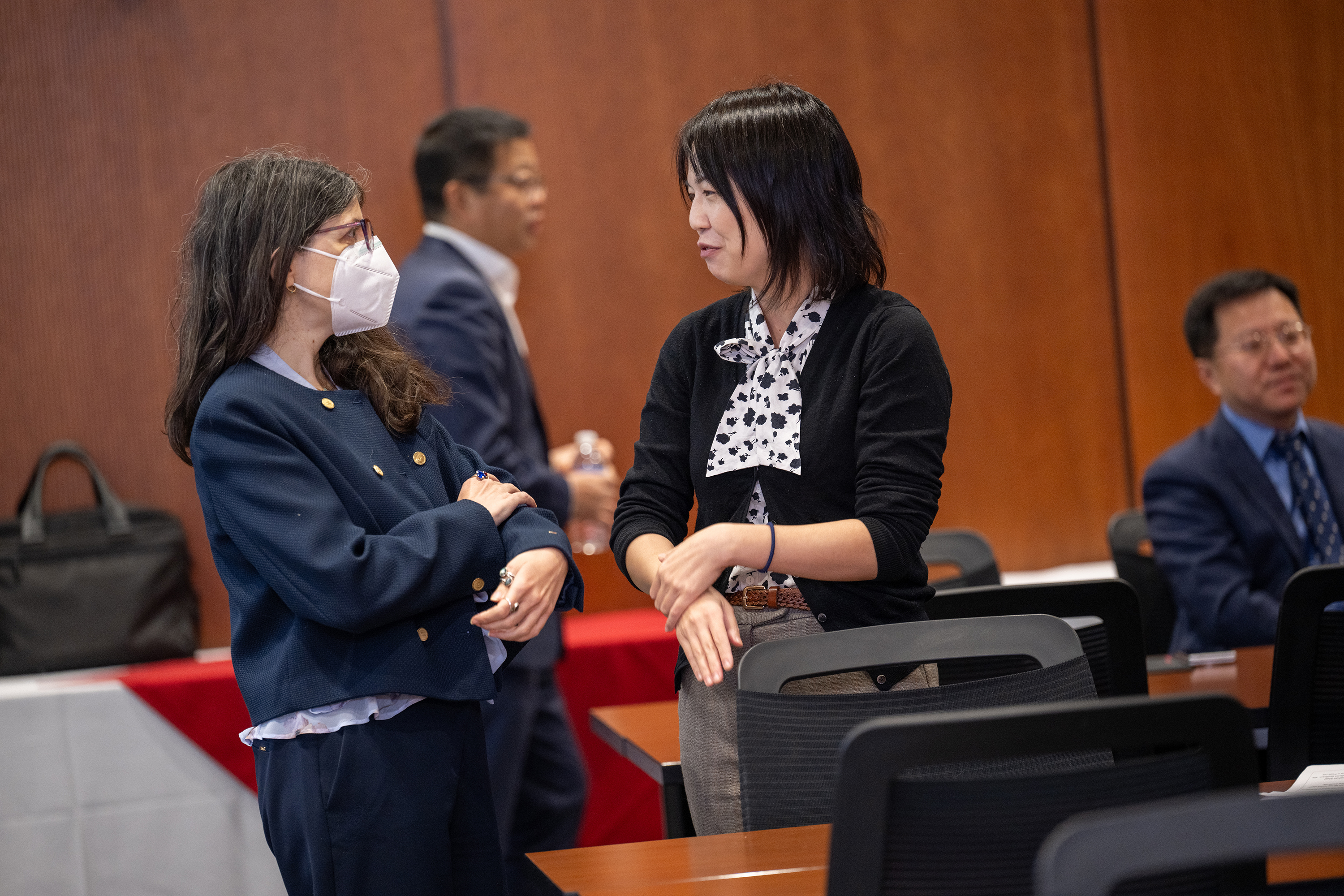
Afroditi Giovanopoulou, Assistant Professor of Law (left) and Yi-Chen Lo
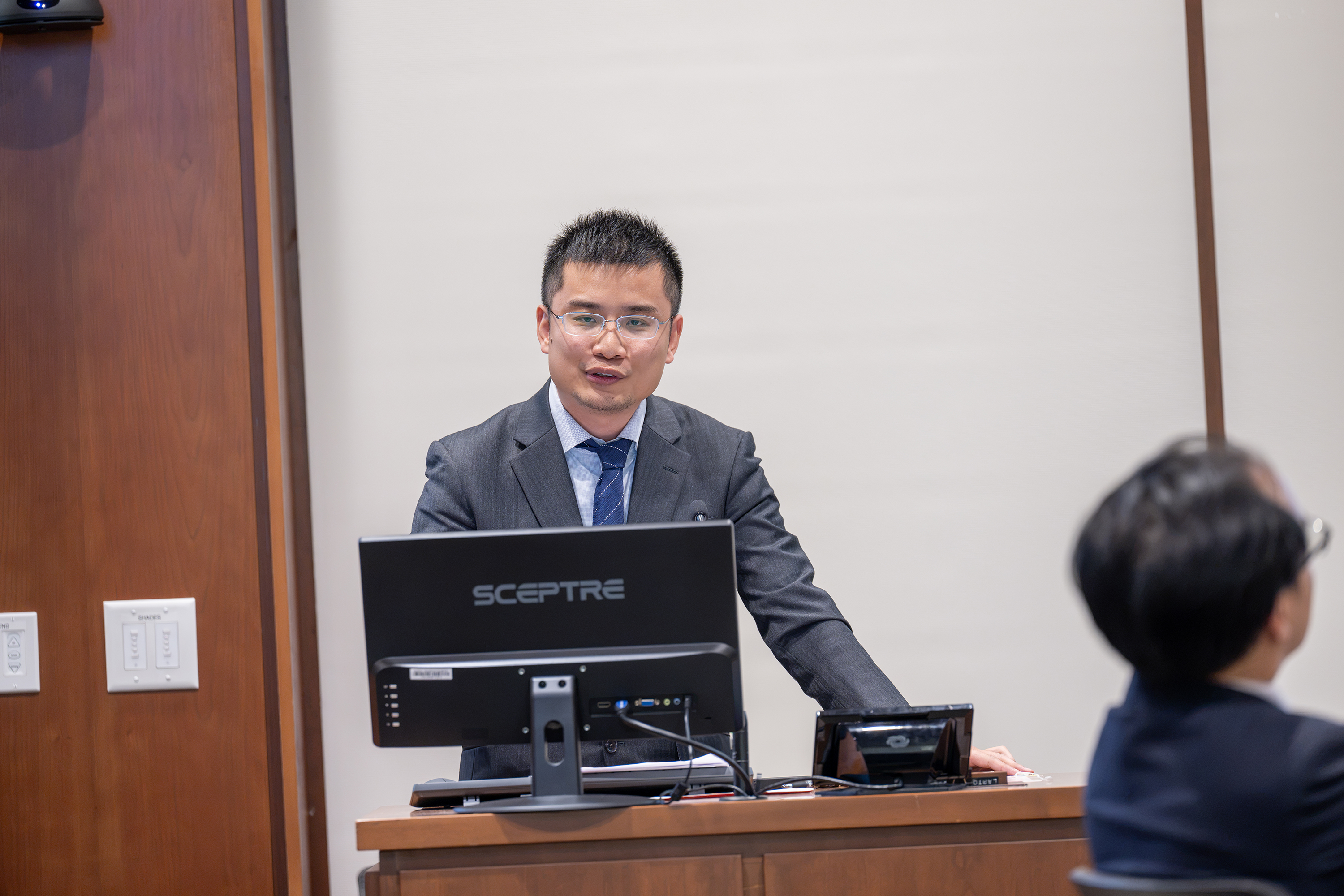
Dingyurui Bao, Assistant Professor, Renmin University (China)
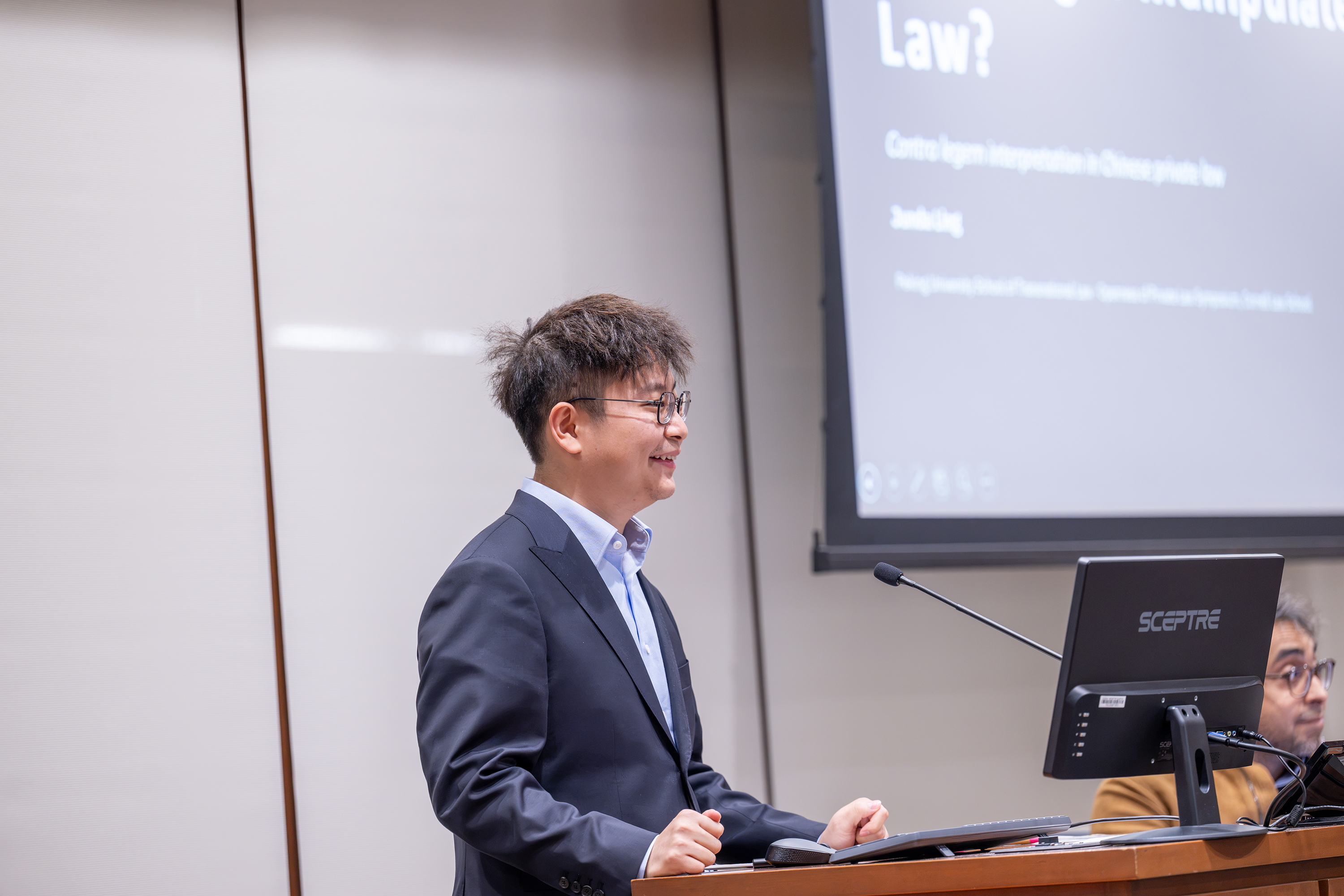
Junda Ling, Post-Doc, Peking University School of Transnational Law (China)
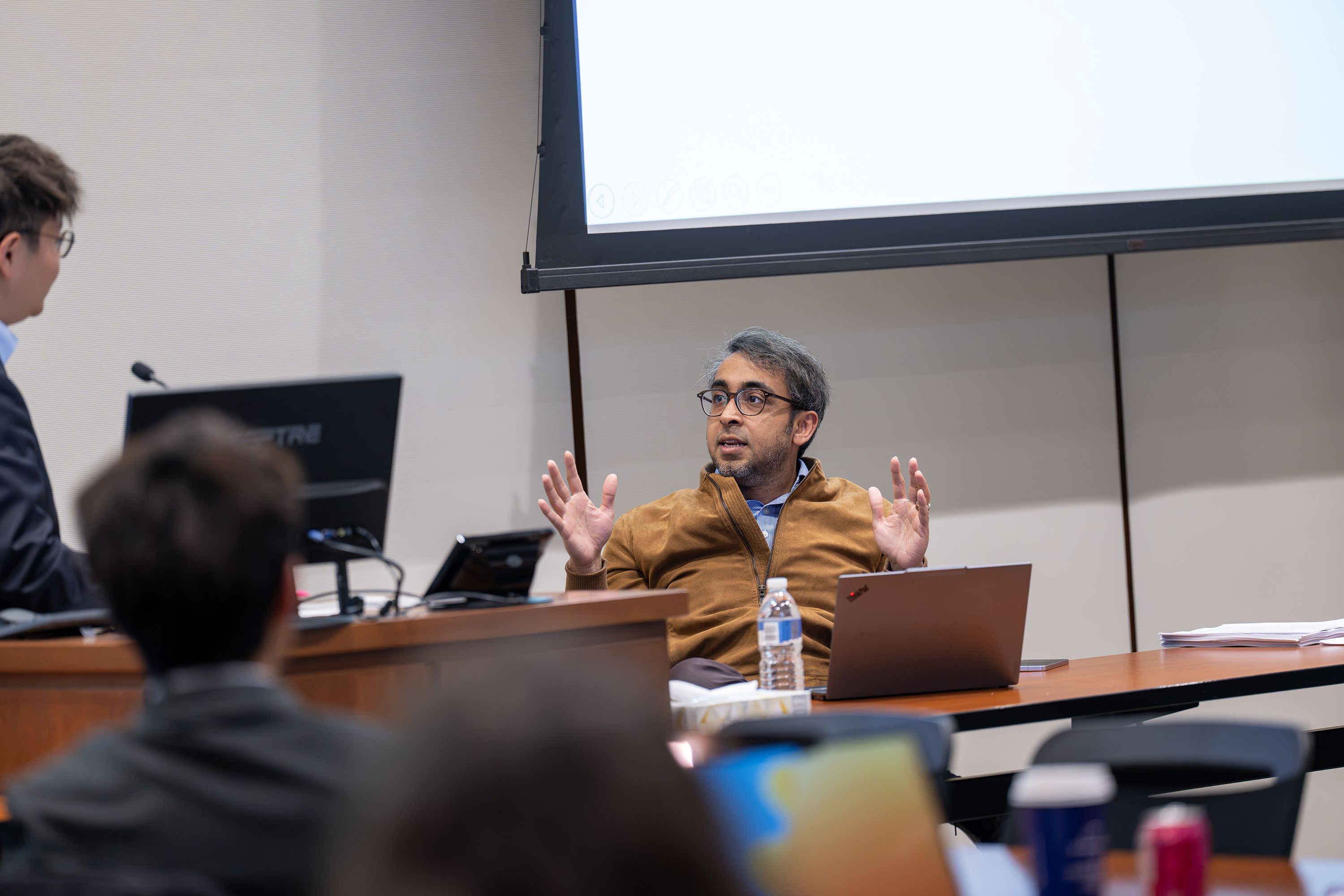
Emad Atiq, Professor of Law and Philosophy, commented on Junda’s paper
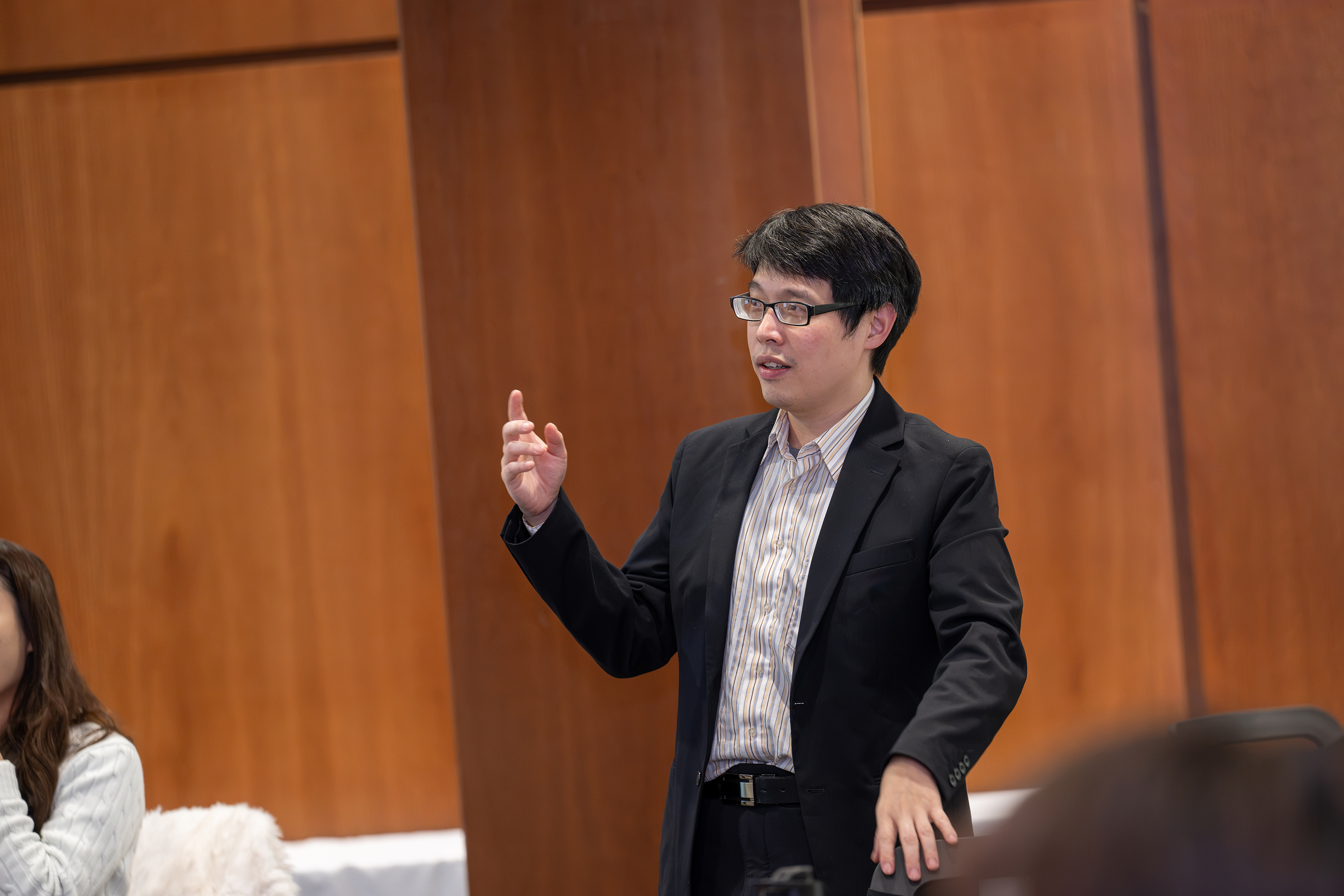
Kuan-Ting Chen, J.S.D. student, Cornell University
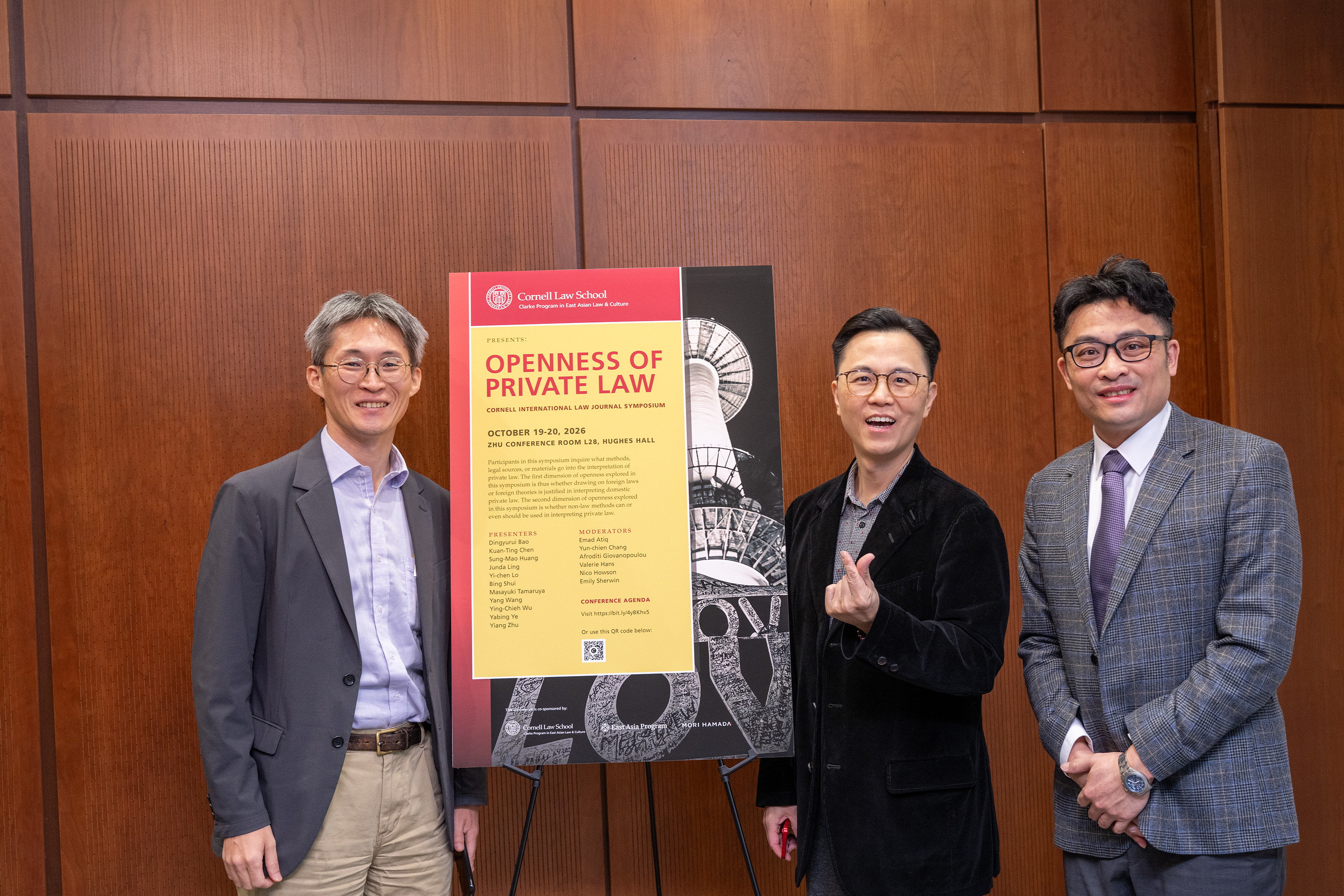
Friendship across East Asia: Masayuki Tamaruya (Japan, left), Ying-Chieh Wu (South Korea, middle) & Sung-Mao Huang (Taiwan)