This website uses cookies
We use cookies to ensure that we give you the best experience on our website. If you continue to use this site we will assume that you are happy with it.



Early American juries did more than decide cases. They investigated public officials, helped determine where roads would go, and pressed state governments for policy changes. Their authority extended to questions of law as well as fact, giving them a share of governing power that would be unfamiliar to most jurors today.
Although their authority has narrowed, juries have remained a powerful means for citizens to shape legal decisions and check government power. Today, as fewer cases reach juries, those opportunities are increasingly limited. What that decline means for democracy was a central question at “The Importance of the Jury Right to Our Democracy,” a September 30 panel discussion held as part of Cornell Law School’s America250 programming.
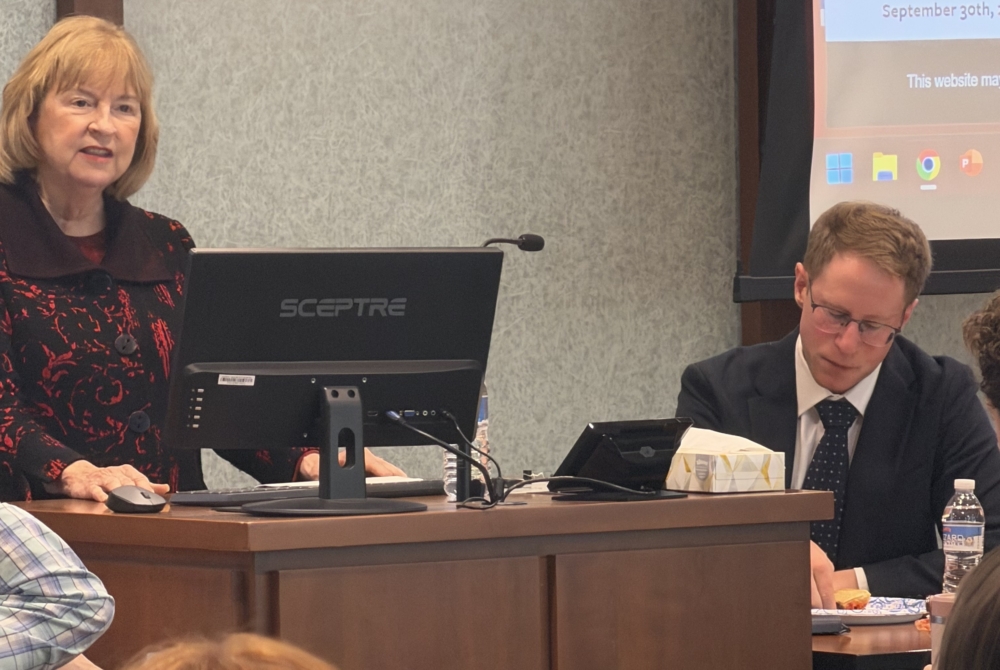
Valerie Hans, Charles F. Rechlin Professor of Law
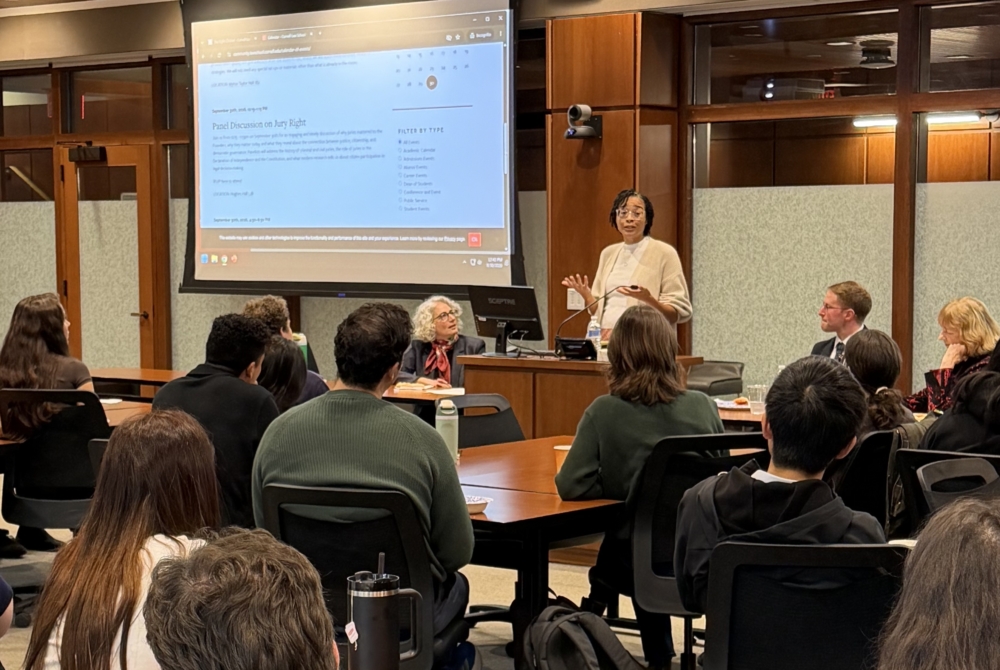
Jessica Eaglin, professor of law talking to the audience about how citizens can influence the criminal justice system.
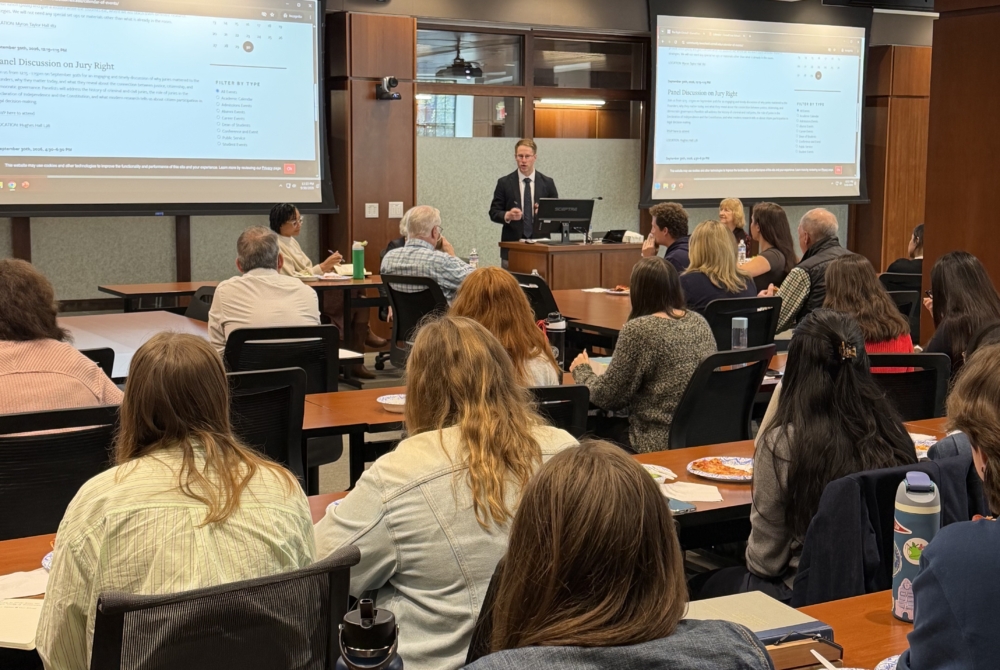
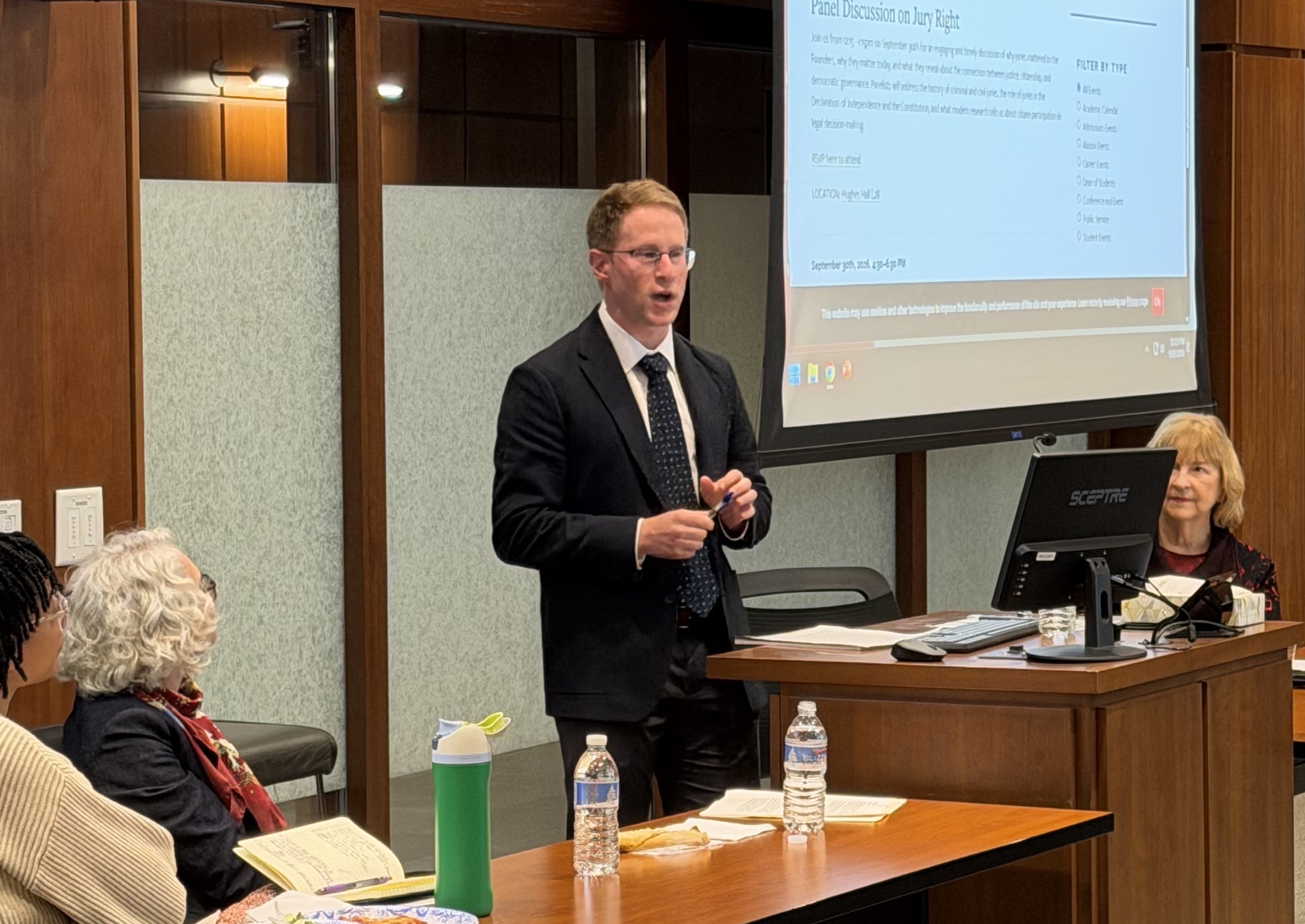
Alexandra Lahav, Anthony W. and Lulu C. Wang Professor of Law, moderated the discussion with Joe Schottenfeld, assistant professor of law and Jonathan and Ruby Zhu Sesquicentennial Fellow; Jessica Eaglin, professor of law; and Valerie Hans, Charles F. Rechlin Professor of Law.
For the Founders, Schottenfeld explained, juries gave citizens a check on government abuse and a role in governing. Disputes over the Constitution’s failure to explicitly protect civil jury trials helped produce the Seventh Amendment.
But that authority rested largely with wealthy, educated, property-owning white men. Those historically excluded from juries, including Black Americans, women, and working-class people, fought through activism and legal challenges to secure their right to serve.
“The more representative jury that is a core to our understanding today of the virtues and balance that the jury provides is the product of a series of struggles that came next after the founding,” Schottenfeld said.
Hans, one of the nation’s leading authorities on the jury system, examined what decades of empirical research reveal about juries’ role in democracy. Although juries are more representative than they once were, they decide only a small fraction of cases. Plea bargains dominate criminal proceedings, while arbitration, summary judgment, and other mechanisms have reduced civil jury trials.
“So the presence of the jury in our legal systems has definitely been diminished,” Hans said. “And in my view, this is a loss because, according to the research, juries do make a difference.”
Studies comparing judges’ and juries’ decisions show substantial agreement. When they disagree in criminal cases, however, juries tend to favor defendants, a finding Hans linked to jurors’ insistence on proof beyond a reasonable doubt. Diverse juries are also more accurate fact finders, she explained, and representative juries’ verdicts are viewed as more legitimate by the public. Jury service can also increase subsequent voting, particularly among people previously less likely to vote.
Eaglin asked where citizens can exercise influence in a criminal justice system that rarely brings cases before juries. One possibility involves public participation in designing algorithms used to inform criminal justice decisions: What should the tools predict? Which data should they use? Is arrest an appropriate measure of dangerousness? Should a jurisdiction adopt an algorithm for sentencing at all?
She also described grassroot community efforts already underway. Court watchers observe proceedings and publish reports assessing what happens. Local communities create bail funds, collectively pooling money to secure people’s release before trial. Community members participate in the defense of individual defendants. In providing information about defendants’ contributions and circumstances in the community, they inform decisions about pretrial detention or sentencing.
Lahav challenged panelists to consider the dangers of public participation alongside its promise. If local prejudice helped shape juries from their beginnings, she asked, how should that history affect our assessment of the institution?
Hans said representative juries can help counter bias by bringing different perspectives into deliberations. But measures intended to reduce prejudice remain imperfect. She described research in which juror orientation videos were well received but failed to reduce subsequent bias.
The final audience question concerned who can afford to serve. A single parent or someone working multiple jobs may face considerable hardship, the questioner noted, even though their experiences are needed on a representative jury.
Hans pointed to experiments with higher compensation, including a San Francisco pilot that paid eligible jurors $100 a day. Making service financially possible, she said, goes hand in hand with explaining why it matters: the jury depends on people being willing and able to take their place in it. Ensuring broad participation, the panel suggested, remains essential if juries are to continue serving as a democratic institution as well as a legal one.