This website uses cookies
We use cookies to ensure that we give you the best experience on our website. If you continue to use this site we will assume that you are happy with it.



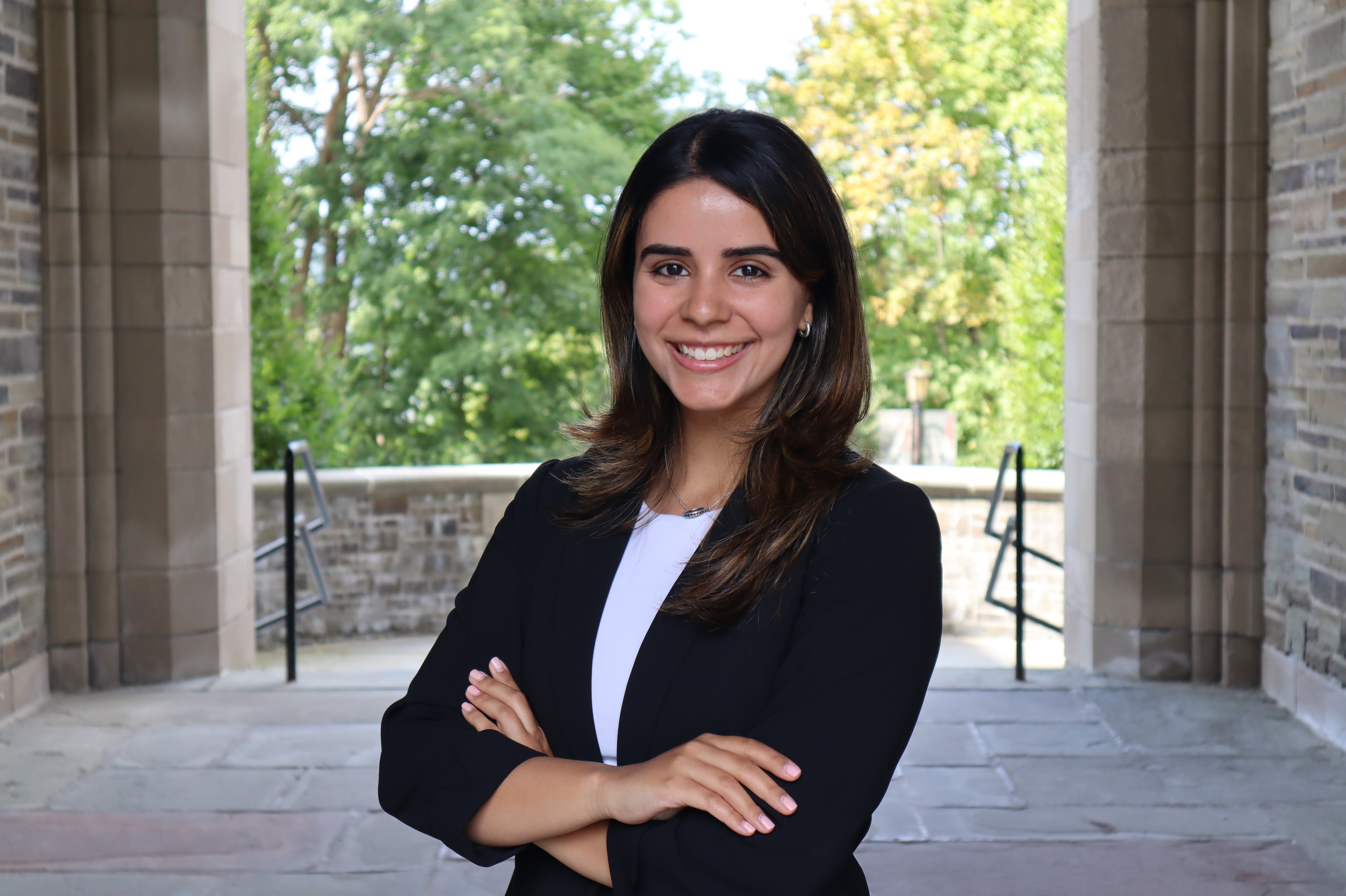
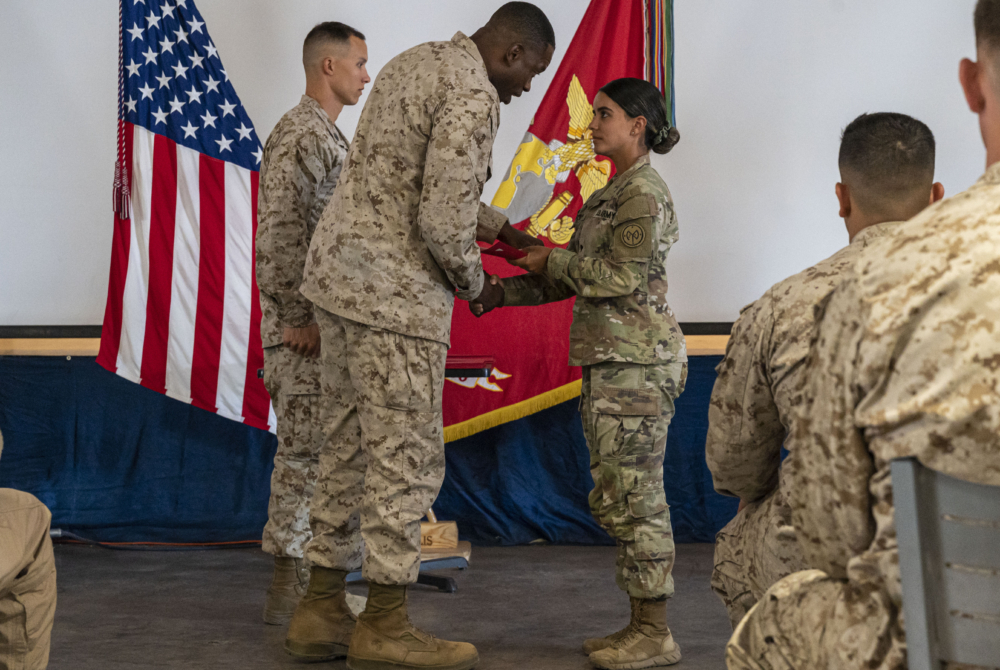
In February 2018, Estefania Solis ’27 emigrated from her home country of Panama to New York City with hopes of starting a career in the federal government. She attended John Jay College of Criminal Justice, where her interest in public service led her to explore opportunities with the Army National Guard.
Having dual citizenship, Solis was able to easily make the transition into the National Guard, and left for basic training shortly after starting college. She eventually graduated in 2020 with a degree in criminology.
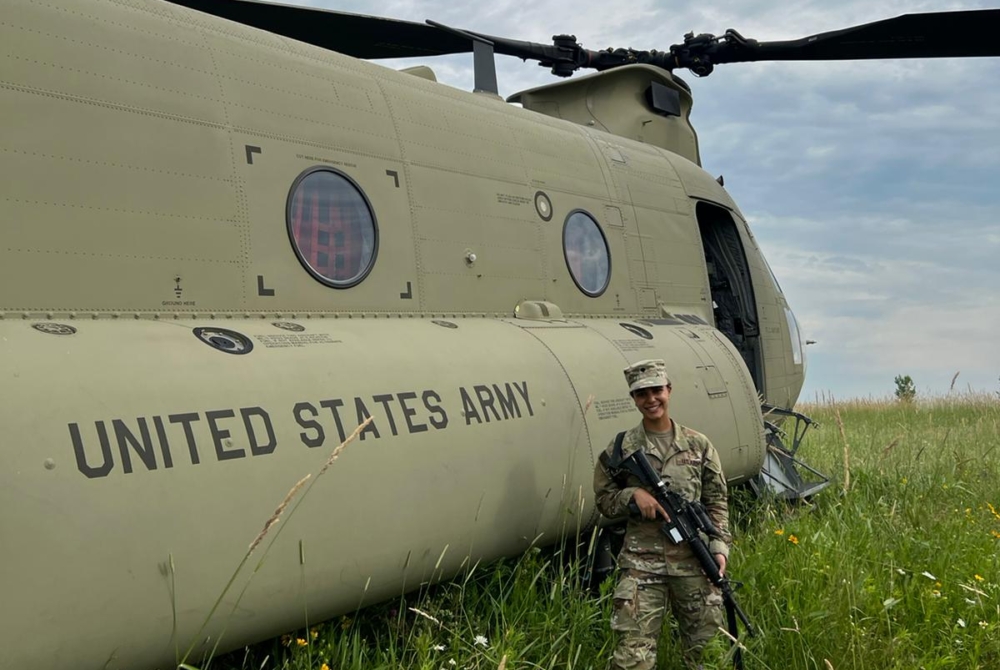
Solis was activated during the COVID-19 pandemic, when National Guard units were assisting communities across New York City as the region faced some of the highest death tolls in the country. In 2022, Solis was deployed to the Horn of Africa. She also worked as a criminal analyst between 2021 to 2024 with the Counterdrug task Force in New York City.
Her experience working with the Counterdrug Task Force helped shape her future plans. Solis particularly enjoyed collaborating with the U.S. Army Judge Advocate General’s (JAG) Corps during her deployment. Inspired by that work—and by her longstanding interest in justice—she decided that law school would be the next step in her career.
As she began researching law schools in New York, Solis discovered Cornell Law School and the resources available for international law.
“It was also a veteran-friendly school. The Dean of Admissions is a former JAG,” Solis said. “I felt that I would be supported during my time at Cornell Law while continuing my part-time military duties, so Cornell was kind of a no-brainer.”
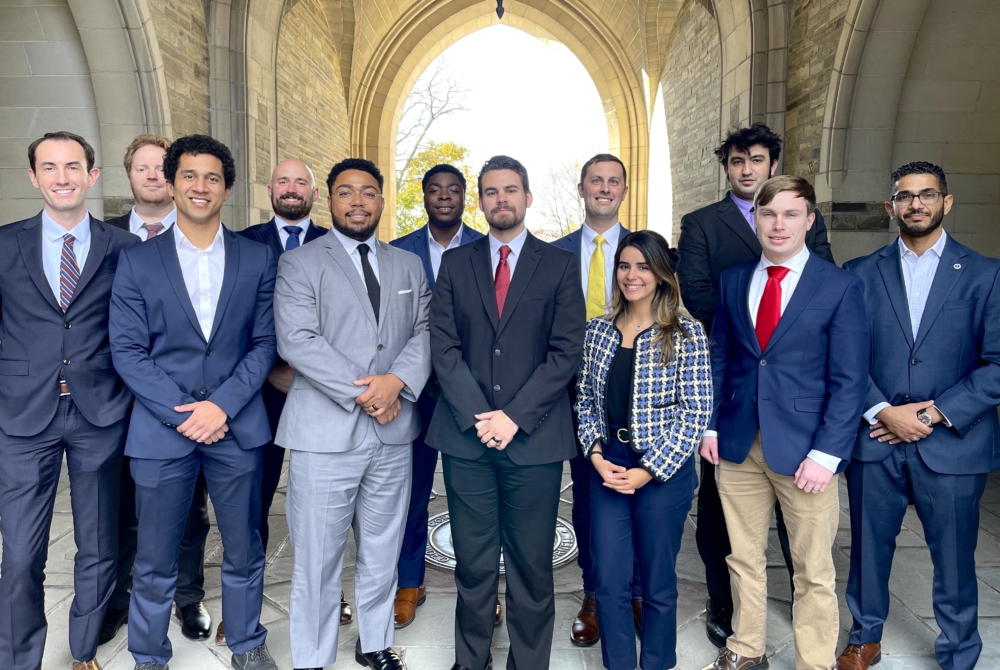
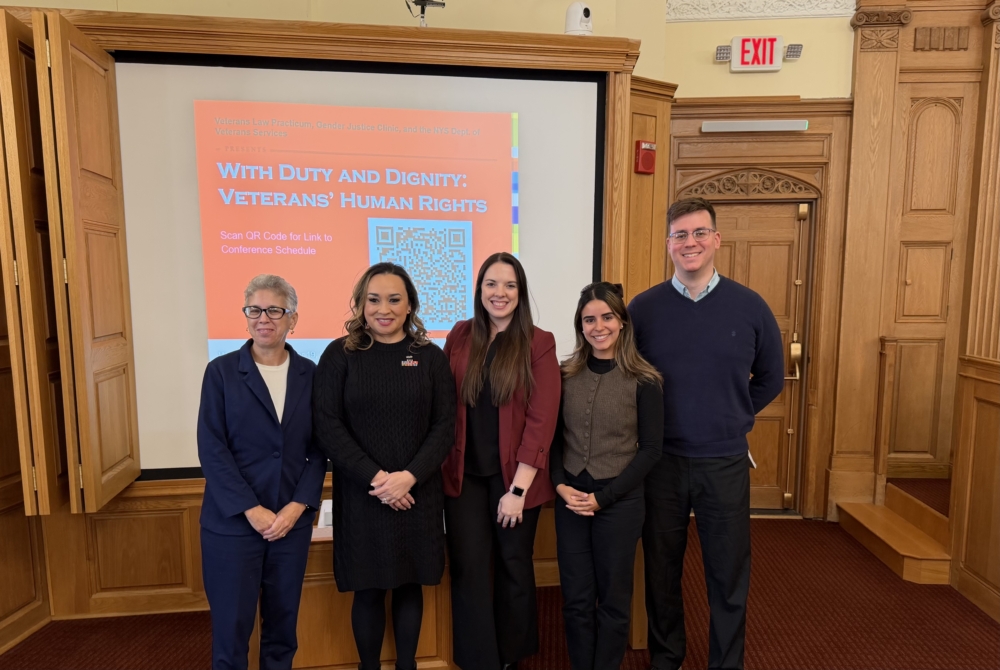
Now a 2L and vice-president of the Veterans Student Association, Solis has been actively involved in the Cornell Law community. She has helped organize Veterans Career Day, participates in several student organizations, and continues to serve as a part-time member of the military. She was also involved in the Capital Punishment Clinic and is now involved in the Transnational Disputes Clinic and the Veterans Law Practicum.
“In the class above mine, there is only one other veteran, Aziz Ali ’26, and he carried the club,” Solis said, referring to the Veteran Student Association. “In my first year, I ran for vice president and helped put together the second annual career day.”
Ali was honored in February with the Freeman Award for Civil-Human Rights at the Law School’s 21st Annual Exemplary Alumni Public Service Awards Celebration, which recognizes students who have made the greatest contribution to civil and human rights during their time at Cornell Law.
At the event, students help first-year law students prepare job applications, conduct mock interviews with attorneys from different legal fields, and participate in informational panels featuring Cornell Law alumni and veterans. Organizers hope to expand the program into a fully in-person event in the future.
Solis has also spent nearly a year working in the Veterans Law Practicum, where students provide information, legal advice, and representation to veterans.
Students handle a variety of cases involving discharge upgrades, appeals, and other related claims. Last semester, Solis worked on a case involving a veteran who served in Iraq in the early 2000s and was dishonorably discharged. The veteran is now seeking an upgrade to an honorable discharge in order to access medical insurance and Department of Veterans Affairs benefits. Solis helped prepare and submit the necessary paperwork for the case, which is expected to be resolved later this year.
“Estefania’s ability to balance continued military service with rigorous legal training and client advocacy is truly exceptional. In the Veterans Law Practicum, she has distinguished herself through thoughtful, detail-oriented work on complex discharge upgrade petitions and federal benefits appeals. Her leadership within the Cornell Law veteran community and her commitment to service—both in and out of uniform—reflect the very best of what we hope to foster in our students,” said James Hardwick, Veterans Law Practicum Director.
“The first year of law school was the hardest,” Solis said. “I had to miss a lot of trainings and make them up during school breaks, but I’m proud to have a unit that supported that.”
Solis also emphasized the importance of the veteran community at Cornell Law. “Aziz reached out to all of us in the veteran class of 2027,” she said. “He created a community where we could feel welcome, seen, and heard.”
Solis hopes that more active-duty service members and veterans will consider attending Cornell Law in the future. Her advice to prospective veteran students: “Lean into the skills you developed in the military, support each other in this new challenge, and connect with other veterans at the school to learn from their experiences.”
After graduation, Solis will join the New York City office of Winston & Strawn. She spent her 1L summer with the firm and says she appreciated both the people and the environment there. She was encouraged to apply by a Cornell Law alumnus and fellow veteran from the Class of 2024 and ultimately decided the firm was the right fit.