This website uses cookies
We use cookies to ensure that we give you the best experience on our website. If you continue to use this site we will assume that you are happy with it.



I came to law school, committed to becoming the best advocate for human rights work in this country and beyond. While I didn’t expect it to be possible, my commitment to this work has become even more profound during my 1L year. Right now, families across the country are grappling with concrete threats to their rights, personhood, agency, and even their lives. With this in mind, I was drawn to the 1L Immigration Law & Advocacy Clinic, knowing it combines direct representation and engagement with clients, advocacy, and a substantive education on immigration law and policy.
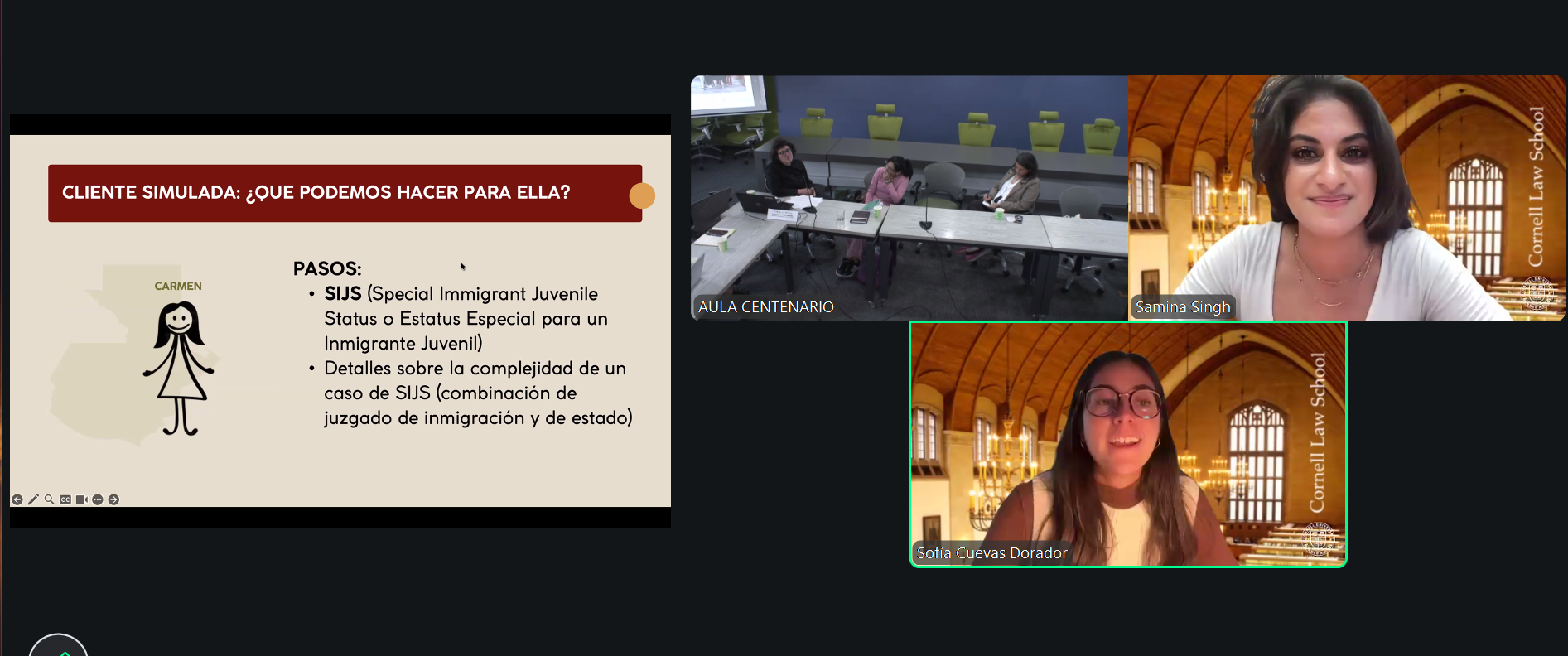
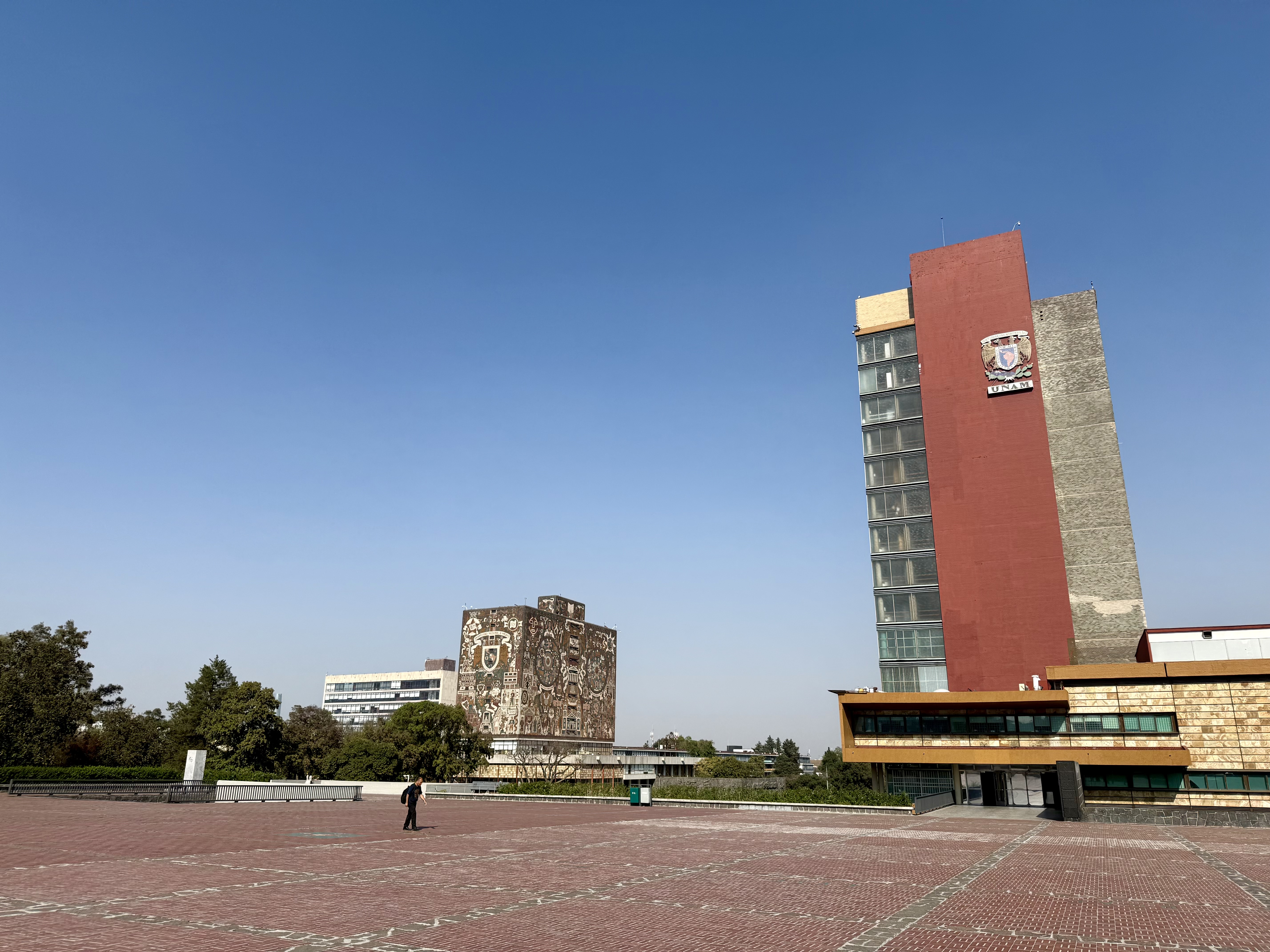
As part of the advocacy component of the clinic, I was invited to attend the Inter-Clinic Discussion on working with migrant clients, hosted by the Universidad Nacional Autónoma de Mexico (UNAM). The hybrid conference brought together students and professors from Mexico, the United States, Argentina, and Spain, to ask hard-hitting questions about the legal landscape in each country, our work in legal clinics and role in this landscape, and how each of our country’s practices and policies are deeply interconnected. I presented in Spanish alongside advanced clinic student Sofía Cuevas Dorador. For Sofía, who grew up in Mexico, this opportunity was particularly special as she presented in her native language at a university she grew up hearing about as so highly regarded.
Ahead of our presentation about how the clinic operates, Sofía and I met to brainstorm how to best present about what our clinic does at Cornell Law. Sofía suggested we show, and not just tell – we came up with a simulated client to illustrate how we engage with our clients, understand her family members and the different forms of relief that might be available to them based on their age, status, and history. In structuring our presentation this way, we were able to demonstrate how complex the asylum and immigration process can be in the United States and hopefully conveyed how our clinic helps clients navigate a demanding and shifting system.
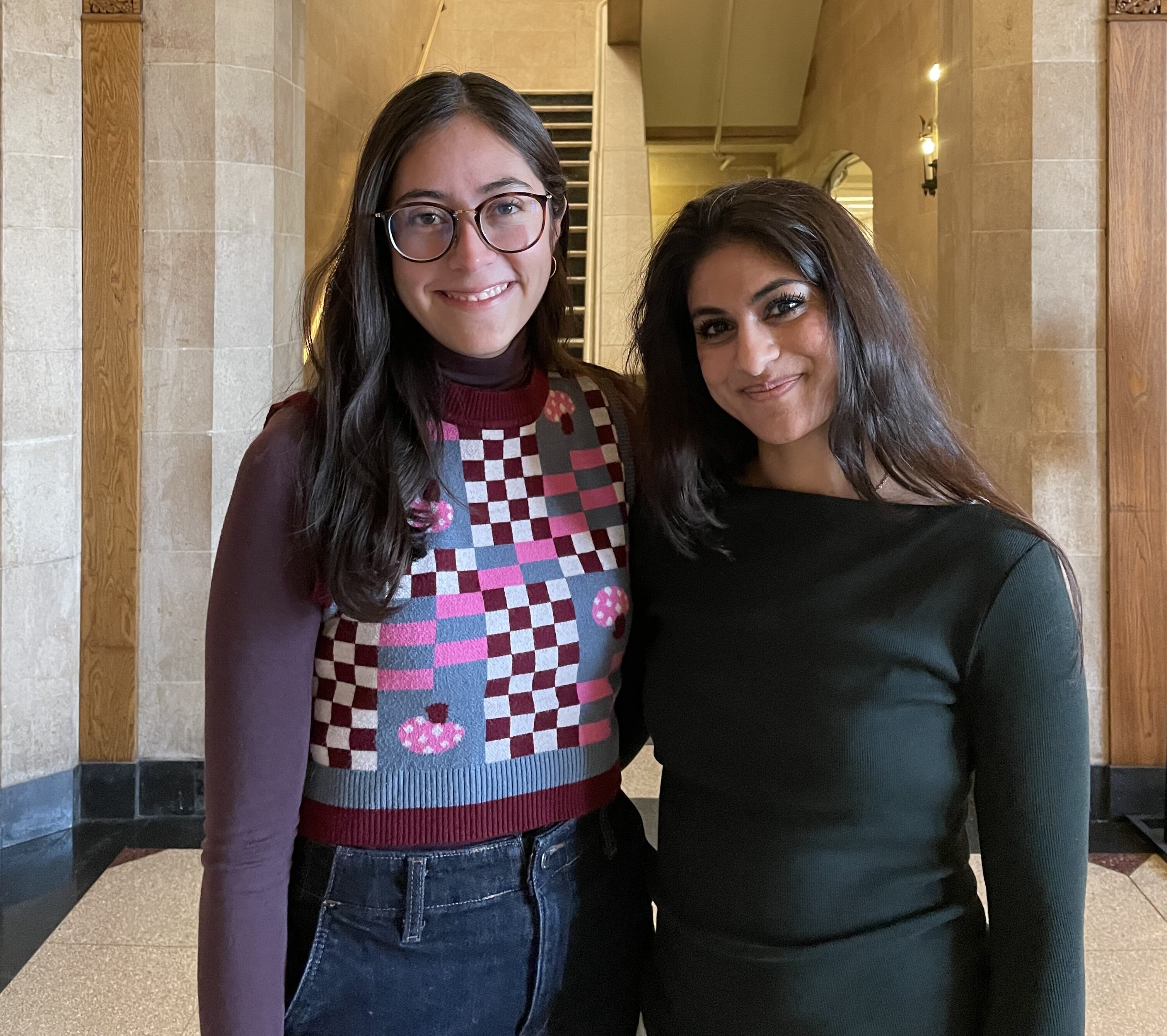
For me, it was invaluable to work alongside Sofía. While I brought enthusiasm, excitement from my initial client experiences, and an eye for design, Sofía brought depth with extensive clinical knowledge and experience working with a variety of clients. I believe our contributions complemented one another well and left me feeling inspired that hopefully I, too, might be able to speak with as much confidence, clarity, and expertise as Sofía did!
The conference itself was also a deeply meaningful experience. Before we presented to the group, we listened in on a high-level discussion about clinical work in different countries, examining in particular the role clinics play, the impact of recent U.S. policy on other countries’ migration patterns and ability to support clients, and the ethical obligation of students and professors alike operating in this space.
My favorite aspect, however, was the solidarity among attendees. Each person was incredibly passionate about their work and spoke at length about its deeper meaning. Many professors raised the delicate balancing act that’s done when working in clinics – integrating disciplines like law, psychology, and sociology while simultaneously navigating the tension between pedagogical goals and the urgent, real-world needs of clients in a rapidly evolving landscape.
One moment in particular stood out to me: one professor reminded us that when serving marginalized communities from within highly academic and often over-intellectualized spaces, we must not merely analyze the circumstances of our clients; we must remember to celebrate those individuals we serve.