This website uses cookies
We use cookies to ensure that we give you the best experience on our website. If you continue to use this site we will assume that you are happy with it.



On November 8–9, 2025, thirty-two Cornell Law students participated in the Law School’s 16th Transactional Lawyering Competition. One of the few intramural competitions focused on transactional practice, it offers a practical, moot court–style experience for aspiring deal lawyers. The competition is integrated into the Introduction to Transactional Lawyering course, which is open to all years and is taught by adjunct professor Mark Underberg.
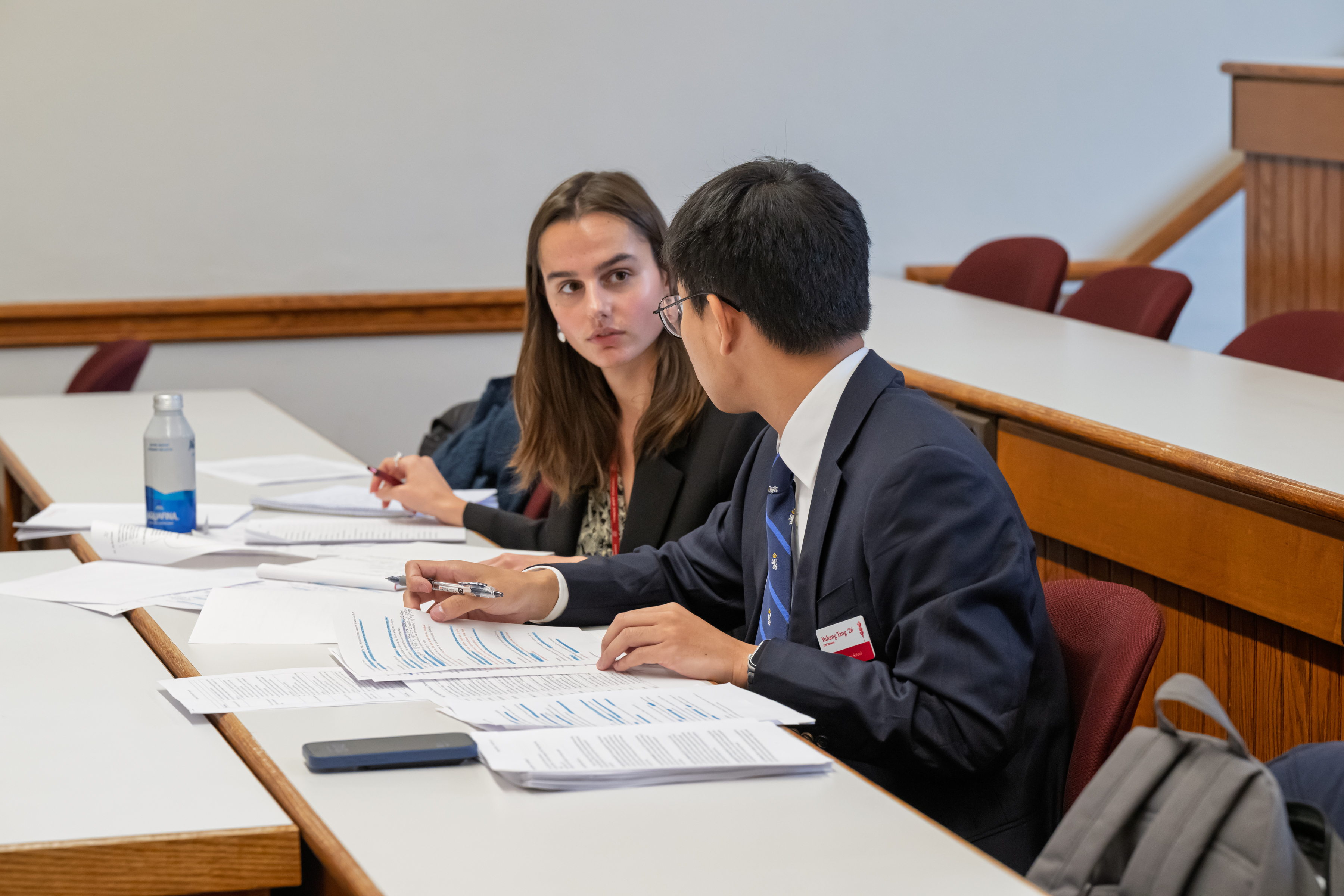
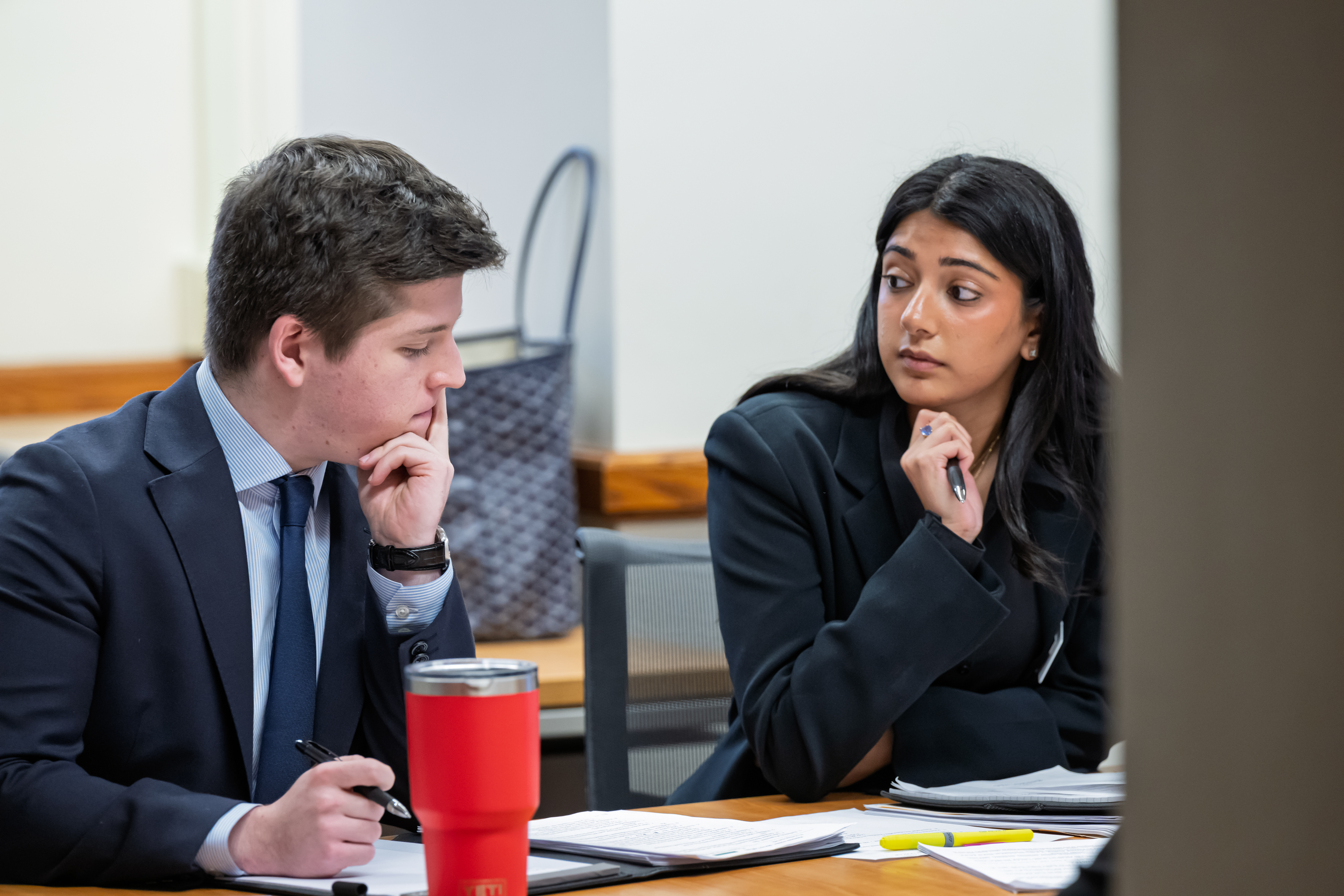
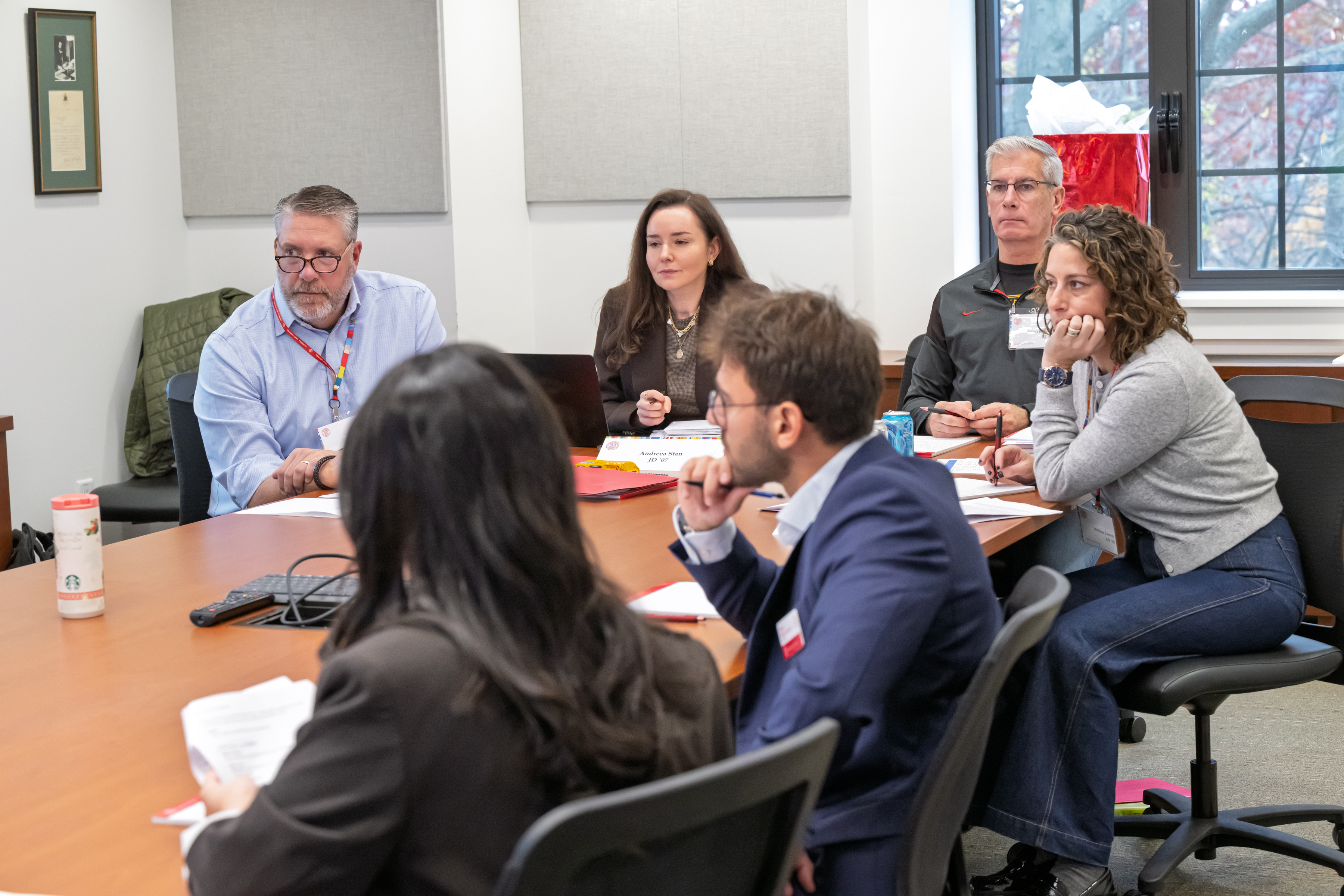
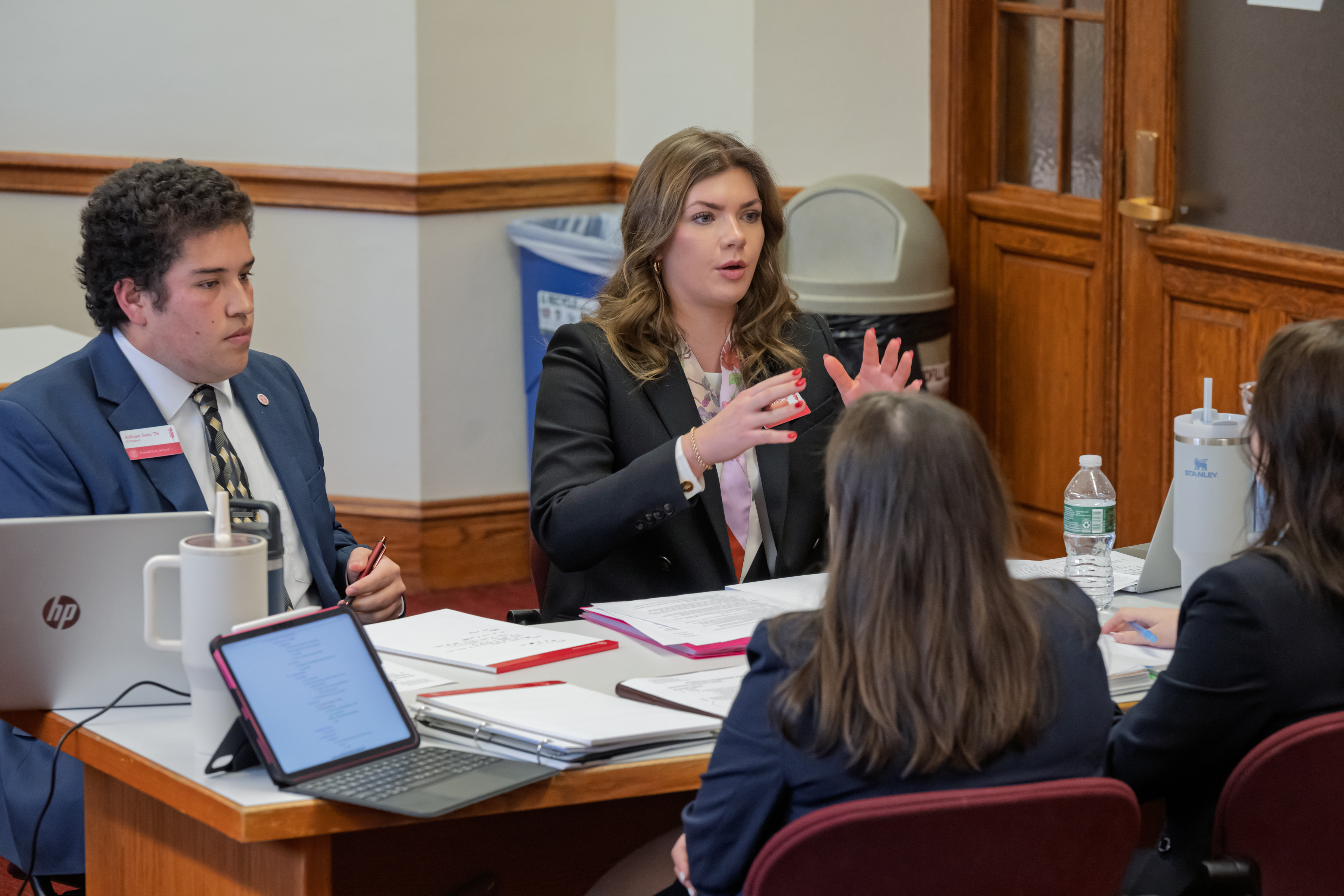
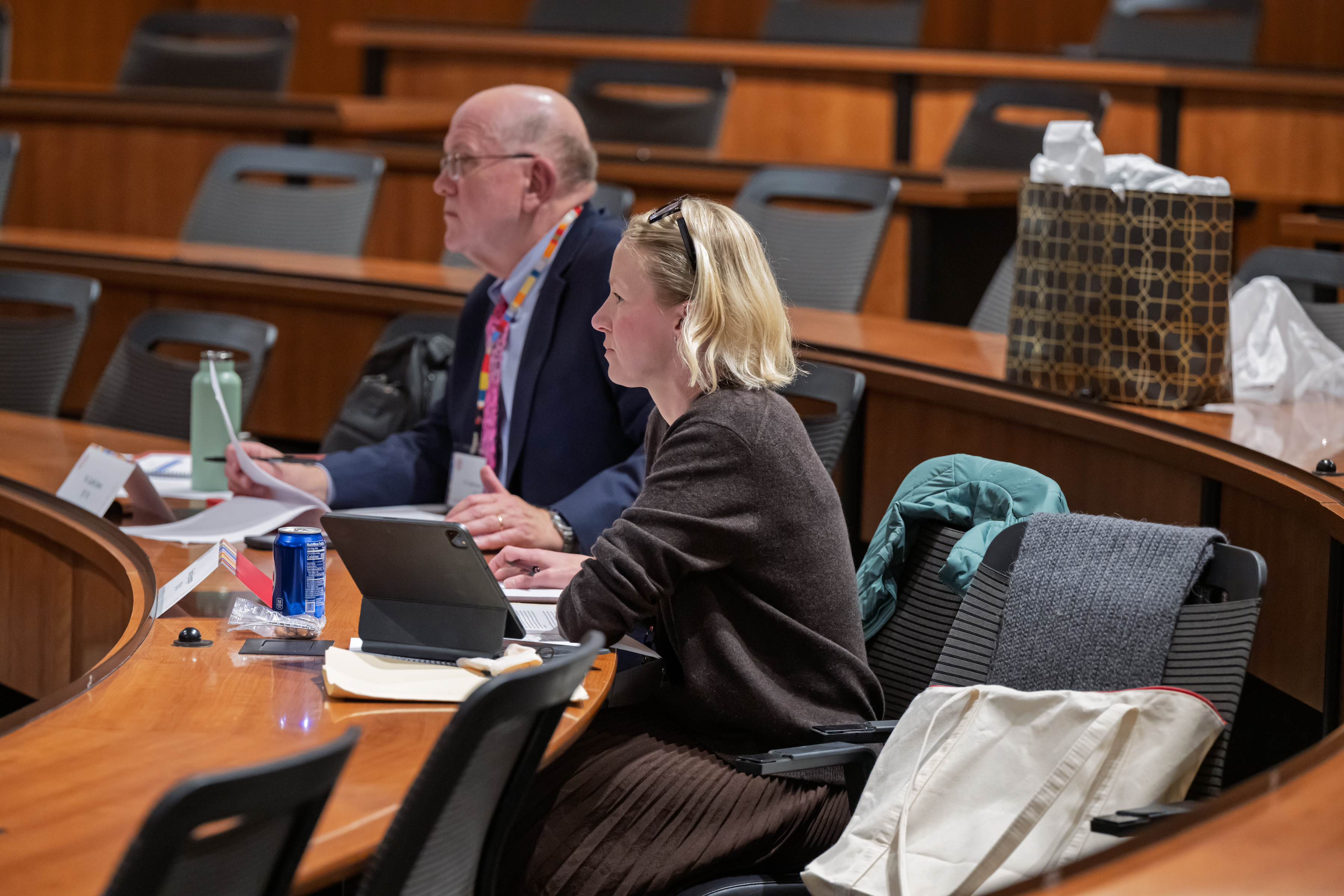
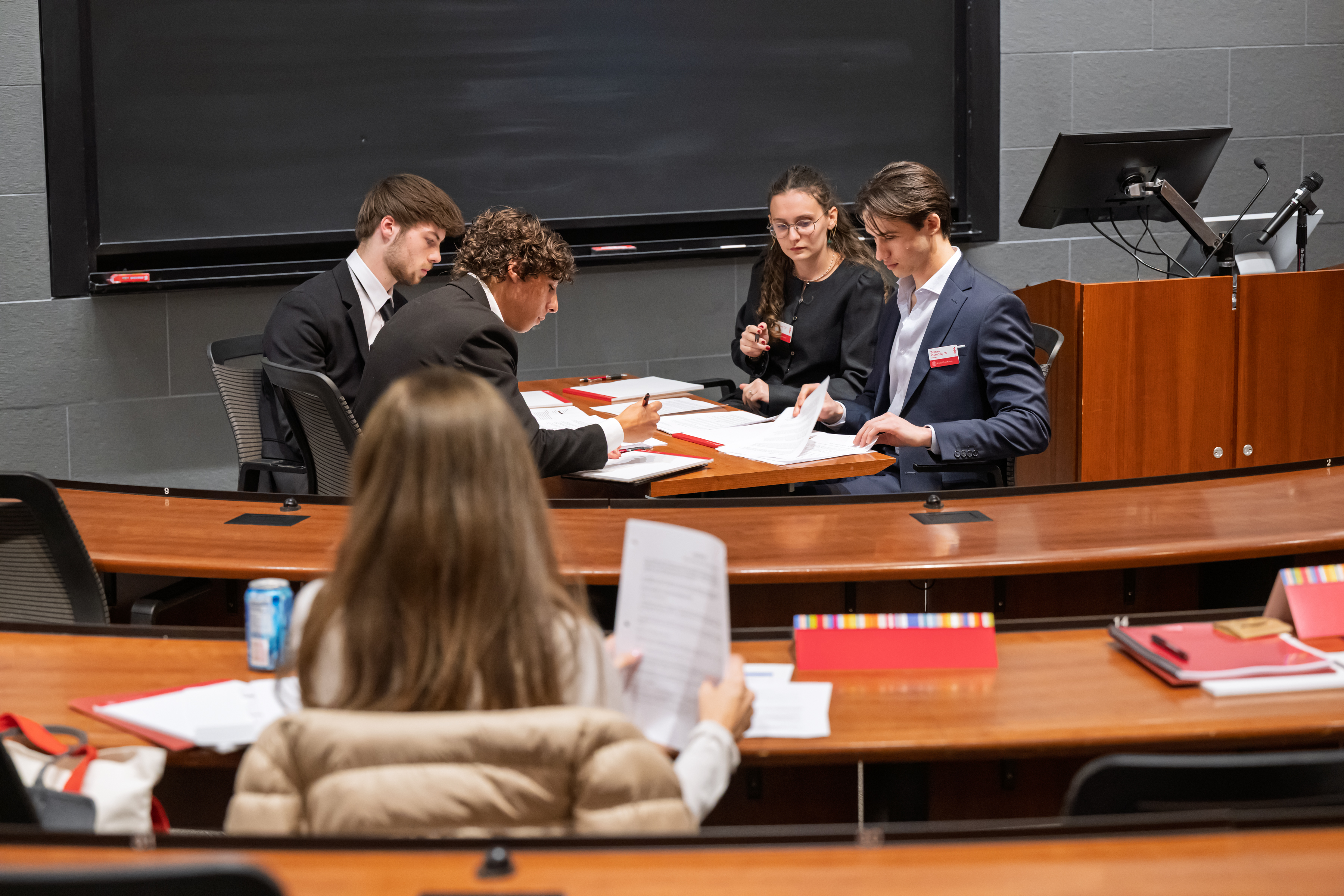
At the competition, sixteen teams of two students each, representing the buyer or seller, engaged in mock negotiations over the sale of a hotel business. The buyer was a private-equity fund and the seller was a public company in the hotel business. The teams were judged by an esteemed panel of twenty-four Cornell Law School alumni, two of whom had participated in the competition when they were students themselves.
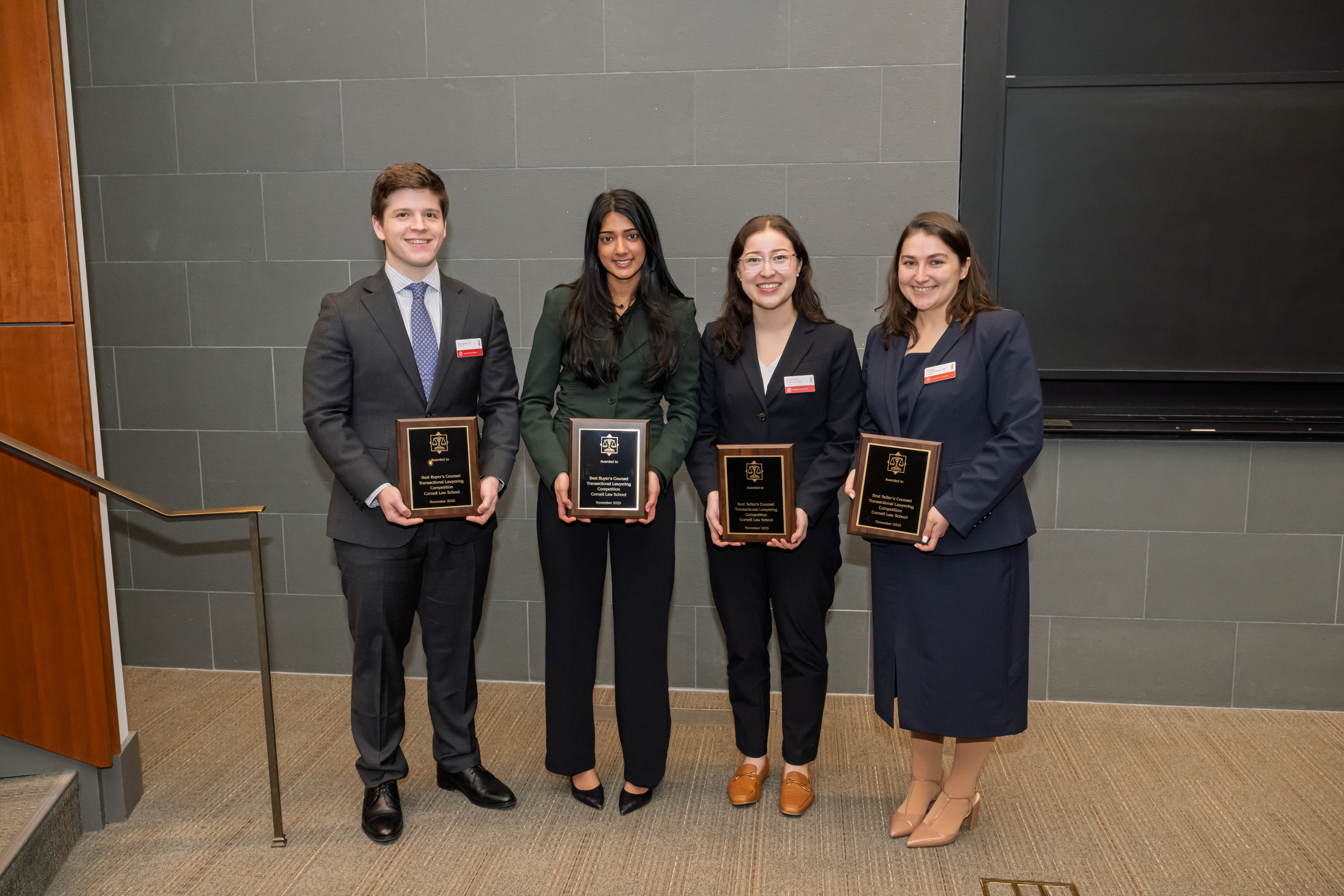
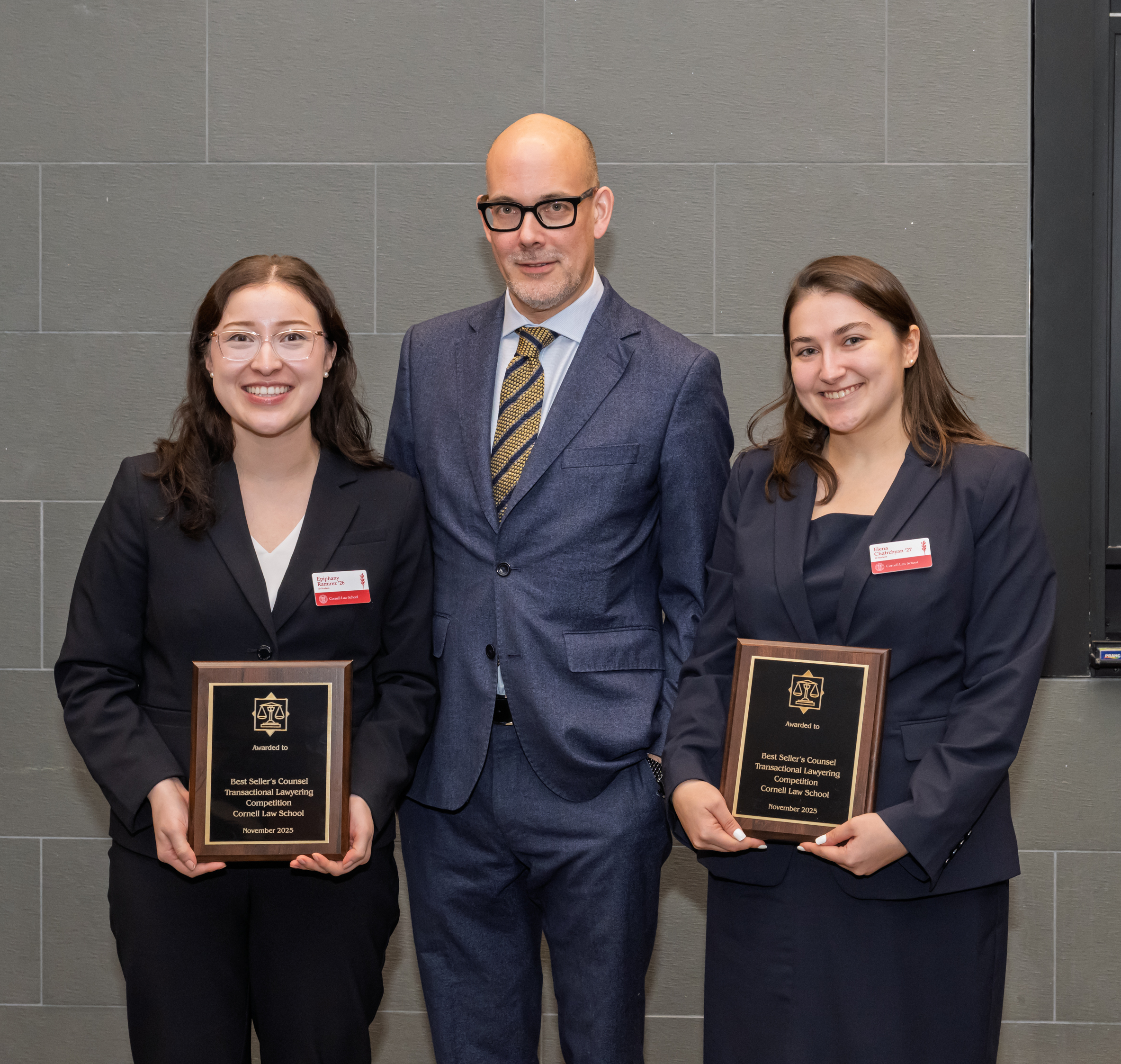
After three rounds of negotiations over two days, the winning members of the buyer’s counsel team were Ria Bajaj ’27 and Ben Joffe ’27, and the winning members of the seller’s counsel team were Elena Chatrchyan ’27 and Epiphany Ramirez ’26. Each winning team received a cash prize, generously funded by an anonymous Cornell alum.
“Participating in this competition was an incredibly rewarding experience,” said Ramirez. “I am deeply grateful to have had the opportunity to learn from so many experts and to build valuable skills. It has been one of the most meaningful highlights of my time at Cornell Law School.”
The Introduction to Transactional Lawyering course is designed to teach students the basics of how a transaction is negotiated. During the course, in the weeks leading up to competition, students deconstruct a contract asset purchase agreement.
“The competition was a great opportunity to apply what we’ve learned in the classroom to a mock deal setting,” said Joffe. “Preparing with my teammate and then working through a live negotiation was incredibly rewarding, especially because it required both strategy and collaboration. It was a great experience to see our preparation come together so effectively during our rounds.”
“The class itself does not really reflect what these law students will experience in their first or second years at a law firm,” said Underberg, “but it does give them a window into the light at the end of the tunnel of what they’ll actually be doing as a senior lawyer, running these deals . . . a preview of a few years in advance.”
The alumni who serve as judges for the competition are given students’ drafted memos and contracts in advance. They then observe student teams during the weekend and provide feedback on each negotiation. Alumni judges assess the student teams on whether they were able to achieve client goals and objectives, how professional they were during negotiations, and the quality of their teamwork skills.
“There are not a lot of opportunities to practice transactional law while in law school,” said Chatrchyan. “This course and the competition are a phenomenal way for students to try their hands at negotiation and deals work. There is so much we learned not just in the preparation for the competition but also the completion itself and all the feedback we received from the judges.”
This year’s competition marked the first year that students were allowed to use artificial intelligence (AI) tools for drafting contracts and identifying key issues in the transaction. Throughout the course this past semester, Underberg discussed the different tools available to transactional lawyers. Alumni at the event also chimed in on which tools they often use, how helpful they are, and how they go about incorporating these tools into their practices.
“Contract markups were better this year with the use of AI . . . it certainly sharpened the distinction between preparation and comprehension,” said Underberg. “The negotiations became the true test of understanding among students. Those who knew the provisions—the purpose they serve, how they related to each other, and how they advanced their client’s priorities—had a big edge in the competition over those who had relied on AI without internalizing the substance.”
Over the years, many former students have told Underberg how valuable the Transactional Lawyering course and competition have been in their legal careers. With one former student stating, “I wanted to let you know how much the Transactional Lawyering class and the TLC has helped me in my first year in the M&A group. For example, yesterday I was at a negotiation of a really big deal, representing a private-equity firm purchasing a division of a large public company. (Sounds familiar, right?). The two partners running the deal argued for about forty-five minutes about sandbagging and I actually understood what was going on. And I even explained it to the senior associate on my team.”
“It’s an amazing program, other schools have tried to do something like it, and they just never really have, for a variety of reasons,” said Celia Bigoness, clinical professor of law, director of the Blassberg-Rice Center for Entrepreneurship Law, and former course instructor. “It’s an important part of our curriculum, there’s always a waitlist among the students, and it’s just so cool to be in a place where our alumni will do this year after year.”
2026 Transactional Lawyering Competition Alumni Instructor-Judges
| Tim | Bixler | Bixler Capital | 1993 |
| Amanda | Bradley | General Counsel, Medallion | J.D. 2013, M.B.A 2013 |
| Steven | Browne | Retired | 1988 |
| Nancy | Bruington | Partner, Latham & Watkins | 2001 |
| Vito | Casoni | President, SMG | 1969 |
| Byron | Crowe | Managing Partner, GreyKeel, P.C. | 2014 |
| Robert | Feiner | Managing Member, Feiner Wolfson | 1985 |
| Alison | Fraser | Chief Legal Officer, Confluence | 2007 |
| Clever | Gallegos | Counsel, Latham & Watkins | 2013 |
| Adele | Hogan | Partner, Broadfield | 1985 |
| W. Garth | Janes | Retired | 1983 |
| Dave | Kimelberg | Kimelberg PLLC | 1998 |
| Melissa | Lewin | Managing Director, General Counsel, Paloma Partners | B.A. 2000
(Yale J.D. 2003) |
| Thomas | Malone | Partner, Davis Polk & Wardwell | 2005 |
| Joshua | Nathan | Joshua C. Nathan, P.C. | 1991 |
| Brendan | O’Connor | General Counsel & Managing Director, Warren Equity Partners | 2005 |
| Edmond | Parhami | Partner, Latham & Watkins | B.S. 2009, M.B.A. 2011, J.D. 2012 |
| Jennifer | Perry | Lennox International Inc. | 2006 |
| Dunia | Rkein | Legal Personnel Associate Director of M&A, Paul, Weiss | 2013 |
| Lindsay | Silber | Partner, Holland & Hart | 2004 |
| Brandon | Smith | Executive Vice President and General Counsel, CHS | 2005 |
| Andreea | Stan | Senior Vice President, Global Corporate & IP, Ralph Lauren Corporation | 2007 |
| Kelann | Stirling | Partner, Kirkland & Ellis | 2004 |
| Bill | Verhelle | CEO, QuickFi | 1998 |