

This website uses cookies
We use cookies to ensure that we give you the best experience on our website. If you continue to use this site we will assume that you are happy with it.


Since the launch of the Cornell Legal Aid Clinic in 1960, Cornell Law School has helped students move beyond the classroom into the world of practice. A variety of courses provide students with opportunities to assume the role of advocate on behalf of real clients with real legal problems. Experienced faculty supervisors work closely with students to assist their development into excellent, ethical professionals. Today, through more than 20 clinics and practicum courses, most Cornell Law students develop as client counselors, litigators, and transactional lawyers while serving the public interest locally and around the world.
In the Clinical Program, students put theory into practice by helping clients from underserved communities preserve their rights and overcome barriers to justice. Whether they are helping a client grow their first business, stop an eviction, challenge a death sentence, or argue in an international tribunal, they are engaging in the deep learning that can only happen when problem-solving outside the classroom is paired with doctrinal rigor within it. This is experiential learning at its finest. When students develop skills while assisting a real person, with that person’s future at stake, they remember these skills long after the case is over. For many, the experience is revelatory.
A.D. White stated that he wanted Cornell Law School to provide students with training in which “legality” would not “crush Humanity.” His hope was that these students would become lawyers who were “large-minded,” “morally based,” and “a blessing to the nation, at the bar, on the bench, and in various public bodies.” His words demonstrate that public service has been at the heart of Cornell Law School’s mission from the start.
In 1960, newly minted Law School alumna Betty Friedlander launched the Cornell Legal Aid Clinic, a student pro bono effort that evolved into for-credit courses in the early 1970s. Through the Legal Aid clinic, students worked closely with faculty and local legal services attorneys to represent low-income Tompkins County residents, providing them with much needed access to justice. The Legal Aid Clinic subsequently expanded into Cornell Law School’s Clinical Program, through which students continue to assist local residents, as well as individuals throughout the United States and abroad.
The Clinical Program now builds on the work of generations of students and faculty, and especially on the exceptional leadership of my predecessor, Beth Lyon. We work at the cutting edge of the most pressing legal issues. We offer clinics taught by full-time members of the faculty, practicum courses taught by experienced practitioners serving as adjunct professors, intensive national and international externships, and field placements through the Pro Bono Scholars Program.
Together with Dean Ohlin and our exceptional clinical faculty, I am proud to carry forward our tradition of excellent skills training for our students and true access to justice for the people they serve. These are challenging times, and the need for skilled, compassionate lawyers is urgent. A.D. White imagined lawyers “in the best sense.” Every day in our clinics, I watch students become exactly that. I invite you to join them: to learn by serving, to lead with conscience, and to practice law as a calling rather than just a profession.
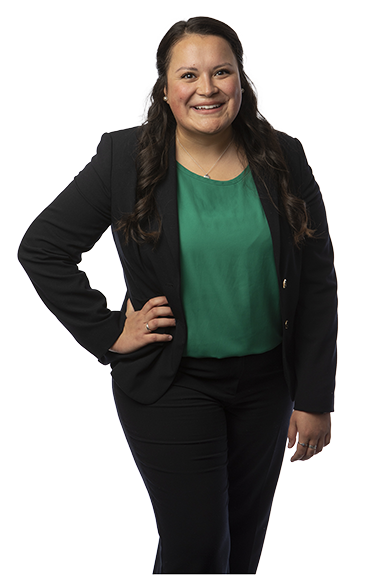
Estelle M. McKee
Associate Dean for Experiential Education and Clinical Program Director
Being a global law school located in a rural area that has few public interest lawyers allows students to combine unique local partnerships with a national and international scope. We also have strong collaborations with other schools within Cornell University, including the School of Industrial and Labor Relations, the S.C. Johnson College of Business, and Weill Cornell Medicine. These cross-disciplinary connections allow Cornell Law students to work in teams bringing multiple skill sets to bear on complex problems.


Estelle M. McKee
Associate Dean for Experiential Education and Clinical Program Director
Director, Asylum & Convention Against Torture Appellate Clinic
Cornell Law School
137 Hughes Hall
Ithaca, NY 14853-4901
Phone and Fax: (607) 255-5135
emm28@cornell.edu
April Denman
Clinical Program
Administrative Manager
130 Hughes Hall
Ithaca, NY 14853-4901
(607) 255-2552
asd5@cornell.edu
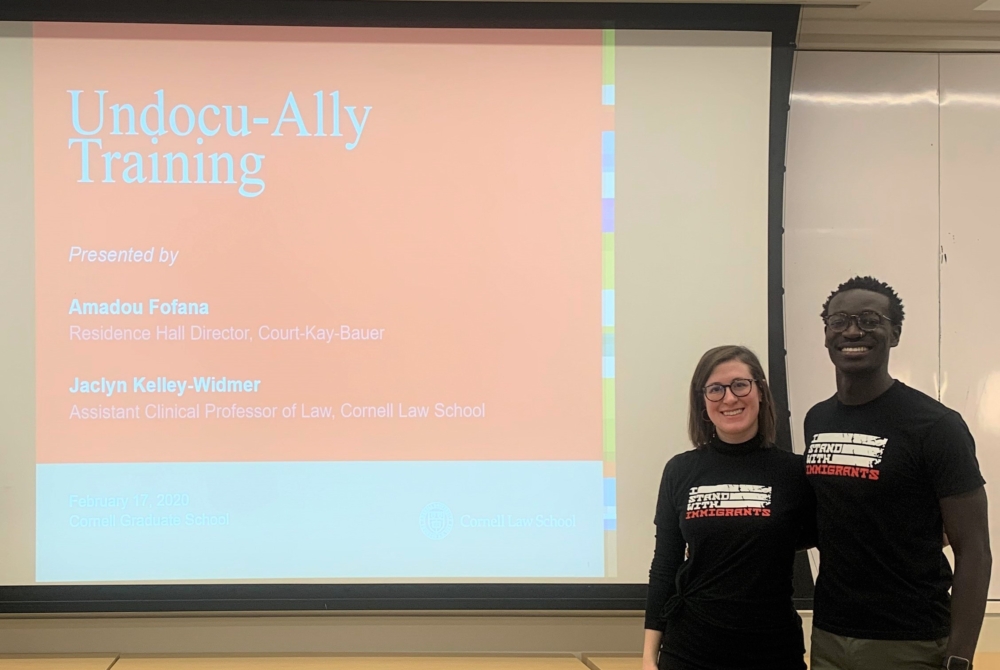
From left: Professor Jaclyn Kelley-Widmer and copresenter Amadou Fofana give an Undocu-Ally training to Cornell staff in February 2020.
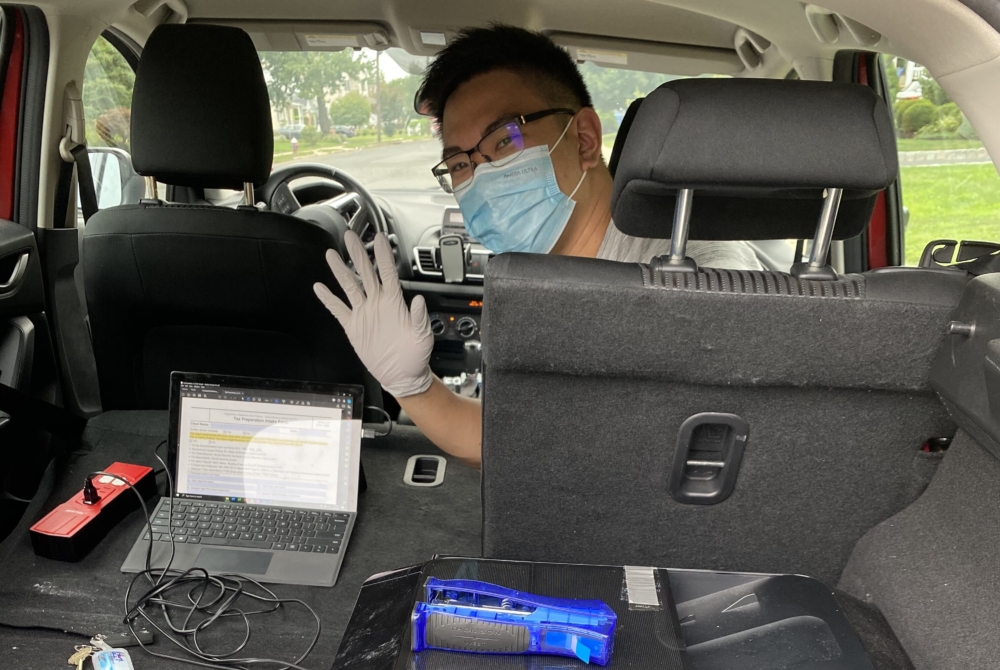
A student in the Low-Income Taxpayer Law and Accounting Practicum does tax prep during the COVID-19 pandemic.
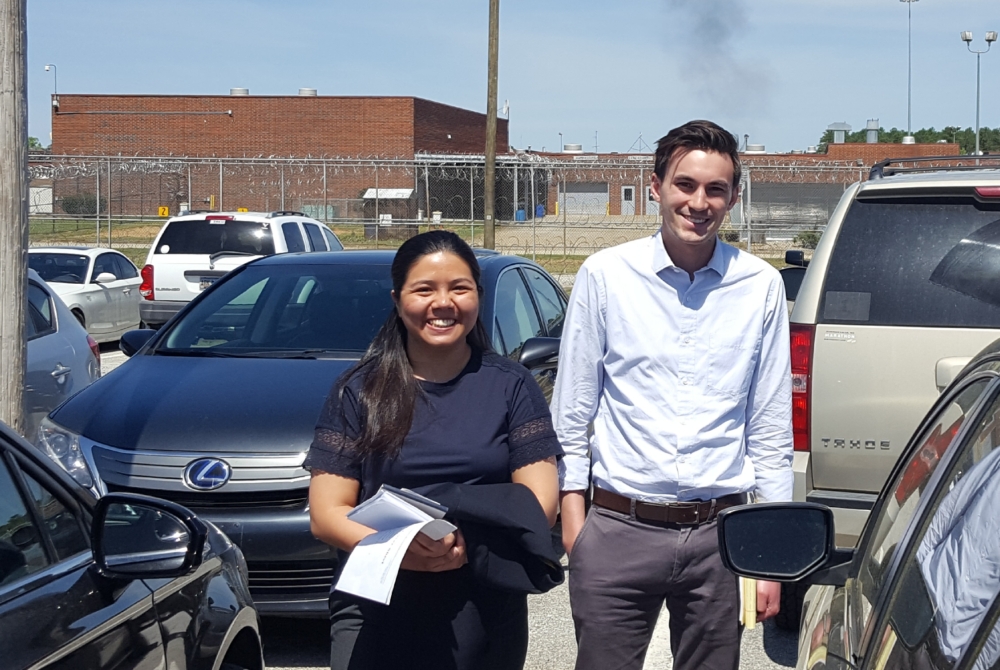
Clinic students Rohini Tashima and Andrew Guiang getting ready to interview clinic client Billy Kelly.
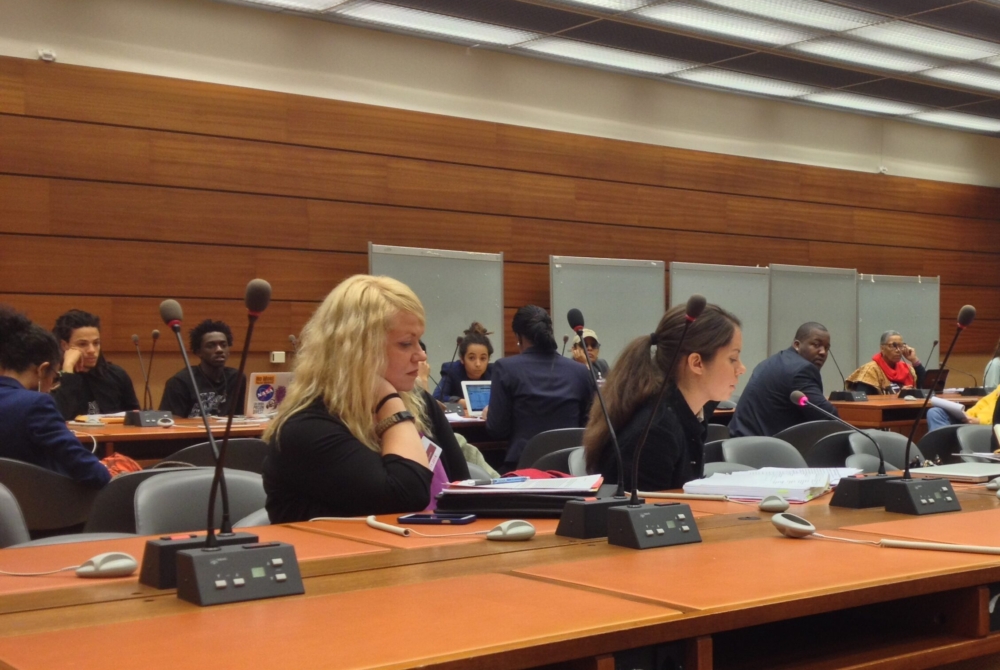
Clinic student Florence Seaman, J.D. ’16 (foreground center), with clinic client Stephanie Schroeder (foreground left), presenting on the issue of military sexual assault during the U.N. Committee Against Torture’s review of the United States in Geneva, Switzerland.
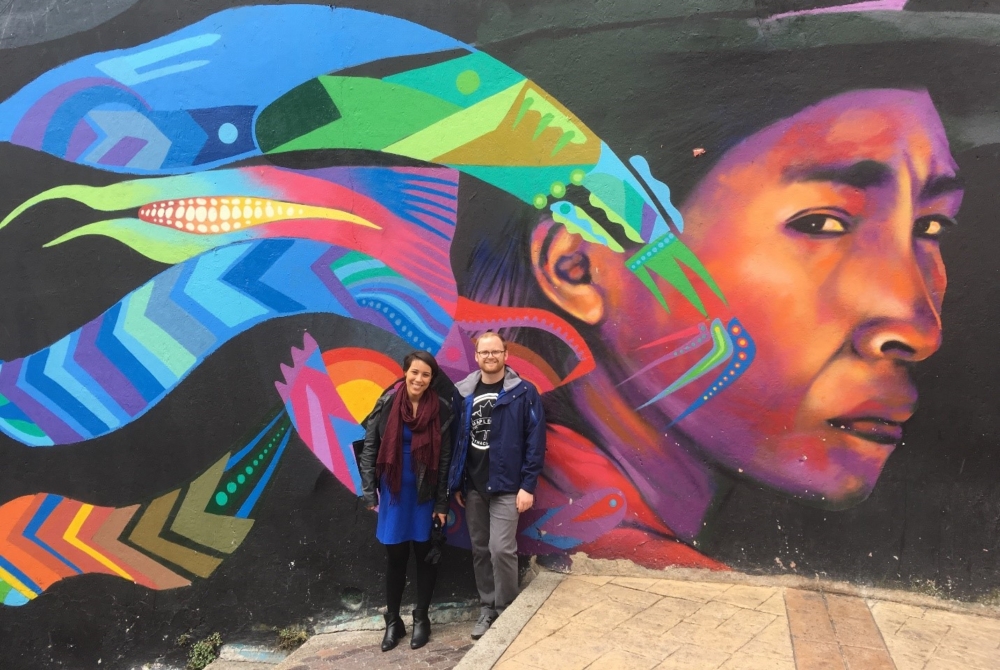
Victoria Inojosa and Matt Lutwen working on a submission to the U.N. on Freedom of Association in Colombia.
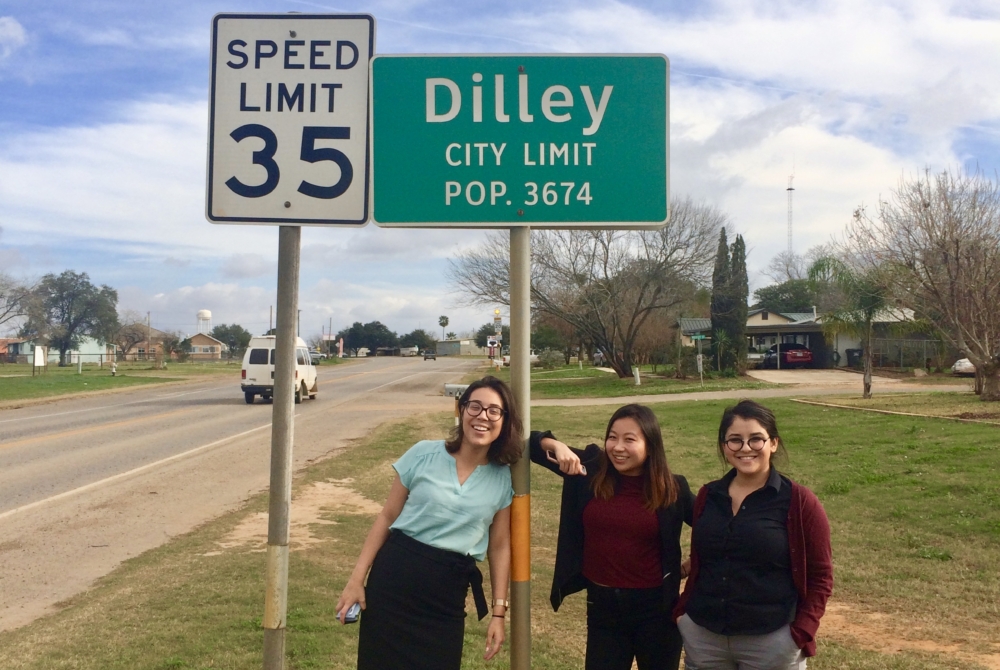
Victoria Inojosa ’19, Linda Lin ’21, and Diana Caraveo Parra ’20 in downtown Dilley, Texas, in January 2019, as part of a trip by the 1L Immigration Law and Advocacy Clinic’s where they volunteered at the country’s largest family detention facility, assisting asylum-seekers with their legal cases.
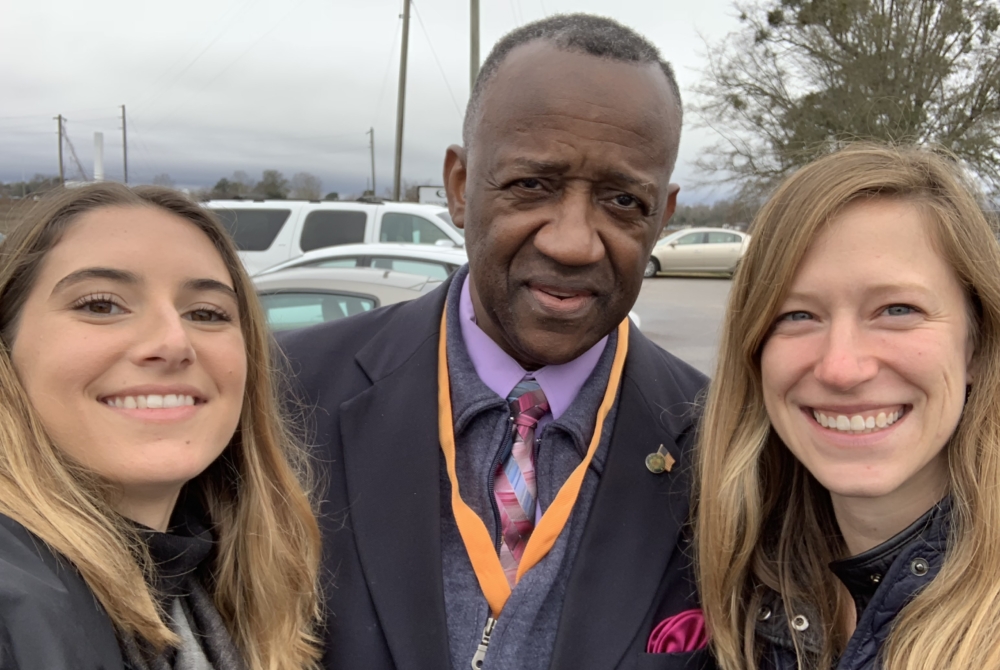
Capital Punishment: Post Conviction Litigation Clinic students Alessandra Scalise (left) and Amelia Hritz (right) interviewing Rev. Delaine in South Carolina while working on the Anthony Woods case.
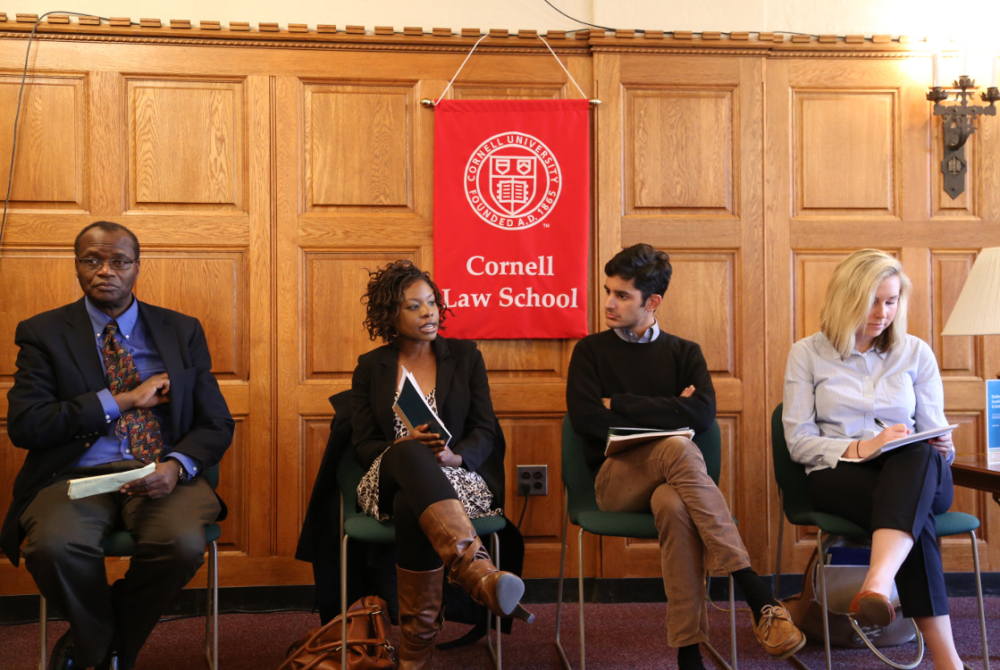
From left: Professor Muna Ndulo; Tinenenji Banda, J.S.D. ’16, LL.M ’07; Christopher Sarma, J.D. ’15; and Amy Stephenson, J.D. ’15, present on the Gender Justice Clinic’s coauthored handbook on Zambian juvenile justice law.
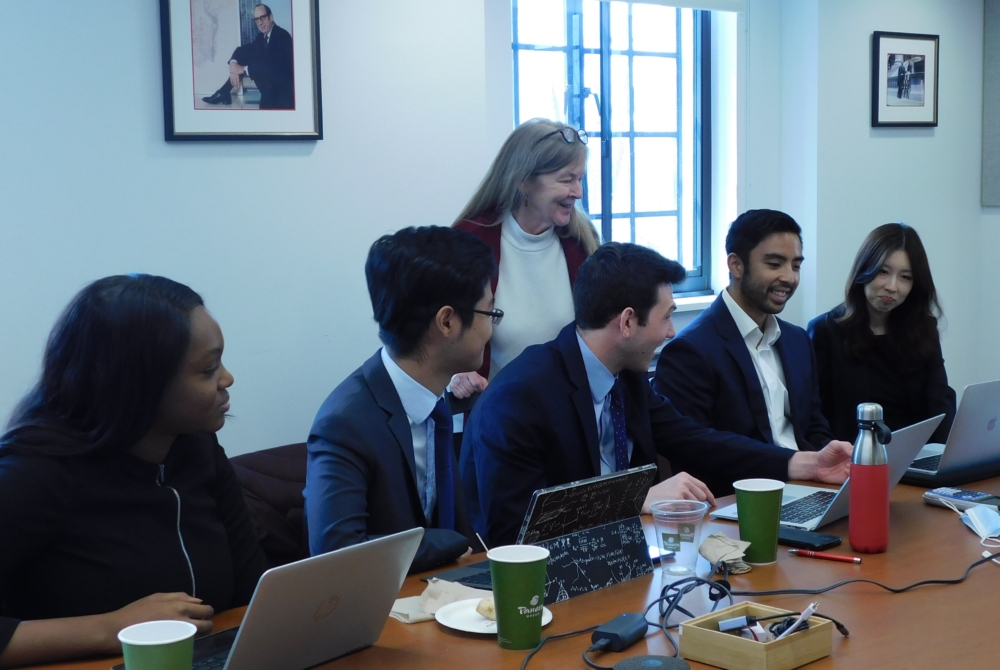
Students in the Securities Law Clinic conduct a mock mediation with Adjunct Professor Birgitta Siegel.